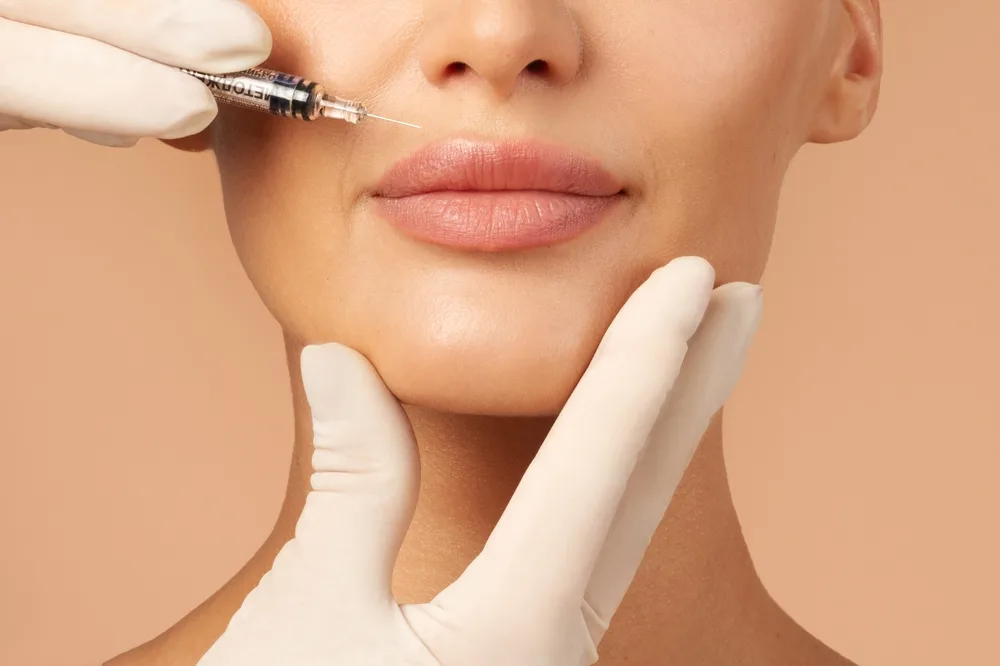
Considering filler does not always begin with wanting more volume. You might notice that lipstick no longer follows a distinct border, that one side of a feature appears less defined, or that a small contour change has become distracting in photographs. The question may be whether something can be refined while the rest of your face continues to look familiar.
Cosmetic filler treatment can modify selected facial contours and soften certain folds, but the quality of the decision depends on a precise goal. A request for fuller lips differs from a request to restore definition, just as improving a cheek contour differs from trying to lift loose skin. Those distinctions should guide the consultation from the outset.
At Women’s LifeCenter Aesthetic Surgery and Medispa, Evanston clients receive assessment and care at our Wilmette practice. Elysa Fisher, MD, FACS, considers the relationship between your features and the change you would like to make. Treatment planning includes the appearance at rest, the way your face moves, and what would feel excessive to you.
You can explore filler without arriving committed to a procedure. The first step is to understand whether the concern is suited to an injectable, which material might be appropriate, and what uncertainty remains. Clear information about results, recovery, complications, and future care helps you decide whether the potential improvement fits your priorities. Filler care at Women’s LifeCenter
Schedule a Complimentary Consultation
Meet Your Aesthetic Physician Near Evanston
The person assessing your face needs to understand both the proposed correction and the surrounding anatomy. A small change in a lip, cheek, or fold can influence how nearby features are perceived. Injection safety also requires knowledge of vessels, tissue planes, and how to respond when an unexpected problem develops.
Dr. Elysa Fisher completed her undergraduate, graduate, and postgraduate education at Northwestern University. She has been board-certified in plastic surgery since 1992 and brings experience in aesthetic surgery and office procedures to her consultations.
This broader perspective can be useful when you are unsure what you need. A person asking for filler may actually be describing a concern involving skin quality or tissue descent. Another may want a limited contour adjustment that does not require surgery. The recommendation should arise from the examination, not from the assumption that everyone who asks about filler needs it.
Defining Your Goal Before Choosing a Product
It helps to begin with an observation rather than a treatment request. “The border of my upper lip seems less distinct” communicates a different aim from “I want a larger upper lip.” Similarly, describing a hollow, a fold, or a change in profile gives the assessment a clearer direction than asking for a fixed number of syringes.
Decide which feature is your priority. A first consultation can cover several questions, but it does not need to produce a plan for every area of the face. Identifying the most important concern makes it easier to weigh a limited improvement against the cost and risk.
Consider how you want the result to feel socially as well as visually. Some clients welcome a change others will notice; others prefer an adjustment that is difficult to identify. That preference should be stated before the clinician proposes the degree of correction.
Bring realistic references if they help you explain yourself. A picture of your own face from an earlier time may reveal a change you find hard to describe. Someone else’s photograph can communicate a style preference, but it cannot establish what your anatomy will safely support or how your result will look.
What Cosmetic Fillers Are and How They Differ
Dermal fillers are materials placed into appropriate tissue layers to create selected changes in shape, support, or fullness. Formulations vary in composition and physical properties. The material needs to suit the site and intended effect rather than being selected only because its name is familiar.
Hyaluronic acid fillers are one commonly used category. Other products have different ingredients, duration, and approaches to correction. These differences matter when discussing both the expected result and what can be done if a complication or unwanted appearance occurs.
Product approval is also specific. The FDA reviews individual fillers for defined uses, which can include particular anatomical areas and age groups. A proposed use outside that labeling requires a separate explanation. Ask what is approved about the product and what applies to your planned treatment.
Filler is distinct from botulinum toxin medications. Filler changes selected tissue contours; a neuromodulator such as Xeomin reduces selected muscle activity. They can be discussed in the same consultation, but they are not interchangeable ways of treating every facial line. FDA consumer guidance on fillers
Areas That May Be Discussed During Consultation
Lip Shape, Fullness, and Definition
Lip assessment includes the visible border, upper-to-lower relationship, projection, and appearance during speech and smiling. It also considers the surrounding skin. A treatment that looks balanced in a still photograph needs to make sense in motion as well.
Explain whether your goal is a change in size, restoration of a feature that has diminished, or a more distinct outline. These aims may overlap, but one should not be assumed from another. Wanting a clearer lip edge does not automatically mean you want a much fuller mouth.
The clinician should evaluate any existing asymmetry and previous filler. Some differences are part of your natural anatomy and cannot be corrected perfectly. The plan should identify which variation may be improved and what would remain rather than promise identical sides.
Cheek Contour and Facial Balance
The cheeks influence the transition between the eyes and lower face. A client may want to discuss reduced fullness, a contour that has always been less defined, or an appearance that changed after weight loss. Each history can lead to a different aesthetic goal.
It is useful to compare front, angled, and side views. Projection that looks modest from one angle may be more obvious from another. Your preferences should therefore concern the whole feature, not a single favorable photograph.
The assessment also distinguishes volume from skin laxity. Additional material cannot remove hanging skin, and creating more fullness may not suit a face that already feels heavy to the client. A clear explanation of that distinction can prevent an inappropriate treatment.
Folds and Transitions Around the Mouth
A deeper fold beside the nose or below the mouth may be influenced by nearby tissue support and movement. Its most visible point is not always the only area relevant to assessment. The clinician should explain why a proposed placement addresses the concern.
Some folding is necessary for an expressive face. Discuss softening rather than assuming that every transition should disappear. The desired result should still allow the mouth and cheeks to look comfortable together during conversation.
If the concern is a fine surface line rather than a deeper contour, another treatment category may be more relevant. Identifying that difference keeps the recommendation from becoming a generic response to the word wrinkle.
Questions About Other Facial Features
Clients sometimes ask whether a chin, jawline, or under-eye concern can be treated after seeing an online example. These areas require their own assessment, and particular locations carry additional risks. A photograph cannot determine whether you are a suitable candidate.
Ask what contributes to the appearance and whether filler would be the preferred approach. A shadow may reflect pigmentation or swelling rather than a simple volume deficit. The willingness to recommend a different path is part of responsible treatment planning. ASPS information on filler uses and limits
Looking at the Face in Motion
Filler results are often shown in still images, but you live with your face while speaking, eating, laughing, and turning your head. The assessment should therefore consider more than a centered photograph with a neutral expression.
For lip treatment, discuss how the shape should fit your smile rather than focusing only on the border at rest. For cheek or fold correction, consider whether the desired contour remains proportionate when the cheeks move. These are aesthetic questions that help define an appropriate endpoint.
The goal is not to monitor every facial motion critically. It is to make sure the treatment plan relates to ordinary life. A result should be judged by whether it fits comfortably into your expression and proportions, not whether it creates an idealized image from one angle.
First-Time Filler and Previous Filler Need Different Conversations
If you have never had filler, your consultation should cover the fundamentals without assuming prior knowledge. Ask how the selected material behaves, when swelling is expected to settle, and what follow-up involves. You should know the product name and why it fits the proposed location.
If you already have filler, the starting point includes what is present now. Bring the previous product, date, amount, and treated areas when available. A return of the original concern does not necessarily establish that all prior material has disappeared.
An earlier complication also needs to be reviewed. Explain episodes of prolonged swelling, visible lumps, tenderness, or dissatisfaction, even if they improved. The next plan should account for that experience rather than treat it as unrelated history.
When records are missing, say so rather than guessing the brand. The clinician can determine what additional assessment is appropriate. A cautious decision to obtain more information can be more useful than adding material to an uncertain starting point.
Medical Suitability for Filler Treatment
Your health history is part of the treatment decision. Relevant factors include allergies, bleeding disorders, medications, active skin problems, prior procedures, and reactions to implanted or injected materials. The specific product may have age restrictions or other labeling requirements.
Report pregnancy, breastfeeding, or plans for pregnancy. Elective filler treatment is generally postponed when safety has not been established for those circumstances. Also mention immune-related conditions and any treatment that affects healing or infection risk so the clinician can assess the full picture.
Infection or inflammation near the intended area may require deferral. If you are having lip treatment, a history of cold sores is important because prevention may need to be discussed. Recent illness and upcoming dental care can also influence timing and should be disclosed.
Suitable expectations matter alongside medical eligibility. Filler cannot guarantee an exact copy of another person’s lips or restore every feature in an older photograph. If the desired change exceeds what the tissue or product can reasonably support, the recommendation should explain that limit.
You should also be comfortable with the possibility of visible recovery and the need for assessment if something unexpected happens. Treatment is a choice that includes both the hoped-for improvement and the practical obligations afterward.
Your Consultation With Dr. Fisher
The visit begins with your priorities and any previous treatment experience. It may help to identify one primary goal and a second concern you would like explained, rather than arriving with a list of areas you feel obliged to treat.
The examination looks at facial relationships, skin, tissue, and movement. Photographs may document the baseline. Your clinician will consider whether filler is appropriate and whether the proposed change would be better approached through a single session, staged treatment, another procedure, or no intervention.
Ask for the reasoning behind the material and placement. You should understand whether the intended change is added fullness, a smoother transition, or improved definition. If the answer is vague, request an explanation tied to your own feature.
Discuss the likely appearance during early recovery and after settling. If you have an event, specify the date and how important it is to avoid visible swelling or bruising. Your first experience may be less predictable than a familiar maintenance appointment.
The consultation should also cover price and follow-up. Clarify what is included, how later adjustments are evaluated, and how urgent concerns are handled. These are part of the treatment decision, not details to be discovered after the procedure. ASPS filler consultation guidance
Preparing for the Procedure
Review your medication and supplement list before the appointment. Do not stop prescription medicines on your own to reduce bruising. If any change is needed, the aesthetic clinician should coordinate with the professional managing the medication.
Let the office know about new symptoms, including a cold sore, rash, dental infection, or illness. Proceeding on the original date is not always the best choice when circumstances change. A revised schedule can be part of appropriate care rather than an inconvenience to work around.
Ask about the products and activities you use around the treatment site. For lip injections, this may include cosmetics or another planned facial service. For cheek treatment, it may involve glasses, headwear, or pressure from a regular activity. Personalized instructions are more useful than broad assumptions.
Finally, make a practical recovery plan. Avoid scheduling the first treatment immediately before travel or an important appearance. Leave a reasonable opportunity for the response to settle and for an in-person assessment if one becomes necessary.
What the Filler Appointment Is Like
The planned correction is reviewed before the skin is prepared. Depending on the area and product, local comfort measures may be used. Tell the team about allergies to anesthetics and any previous difficulty with needles or injections.
The clinician places the material using the technique selected for the anatomy and goal. This may involve a needle or cannula. Both require expertise, and neither should be described as eliminating the possibility of serious complications.
Small changes may be assessed as treatment progresses. A careful appointment can include pauses to compare the appearance rather than treating quantity as the only endpoint. Your earlier discussion of preferred fullness or definition remains relevant during this process.
Report unusual pain or sudden changes immediately. An injection can cause a pinch, but a significant or unexpected symptom should not be dismissed as something you are supposed to endure. Your observations help the clinician evaluate the situation.
At the end of the visit, obtain the aftercare instructions and product details. Confirm when the result should be reviewed and how to seek help outside a routine appointment. That information should be easy to find if a concern arises at home.
Understanding Early Appearance and Final Assessment
Why the First Mirror Check Is Incomplete
Many fillers produce a visible contour change immediately, but early swelling can make that appearance larger or less even than the eventual result. Bruising can also affect how light and color look across the area. The first photograph should not be treated as a final comparison.
Ask for a recovery range specific to the location and material. Different products and tissues do not follow a perfectly uniform schedule. More important than matching an exact day is knowing which changes are expected and which should be reported.
Reviewing Shape After Settling
At follow-up, compare the result with your original goal. Did the border or contour improve in the way you wanted? Does the feature still fit your preference in profile and while smiling? These questions are more useful than searching for every tiny difference between sides.
If something concerns you, describe it without assuming the answer is more filler. An irregularity may call for observation, another assessment, or a different intervention depending on its cause.
Avoiding Premature Adjustments
Adding or removing product too quickly can complicate an evolving result. Follow the clinician’s review plan unless symptoms require earlier attention. A medical concern should be assessed promptly, while an ordinary appearance question may become clearer as temporary swelling resolves. ASPS filler recovery information
Aftercare That Fits Your Daily Life
Use the care instructions given for your specific treatment. Avoid pressing, shaping, or massaging the area unless the clinician has explicitly directed it. Advice about one product or one person’s lump should not be applied automatically to your own injections.
Ask when cosmetics, exercise, skincare devices, and other facial treatments can be resumed. The answer may depend on the location and how you are healing. Describe the actual activity, particularly if it involves heat, pressure, friction, or intense exertion.
For work and social planning, distinguish function from appearance. You may feel able to attend a meeting while still having a bruise or noticeable swelling. Decide in advance whether that possibility is acceptable for your schedule.
If you are traveling, make sure you can reach the practice and obtain local medical help if needed. Do not treat the temporary nature of filler as a reason to ignore symptoms while away. A clear plan for communication makes recovery easier to navigate.
Keep the record of the product and date after recovery is complete. Delayed problems can occur, and future clinicians benefit from knowing what material was used. Your treatment history remains useful beyond the first review appointment.
Risks and Urgent Symptoms
Filler can cause swelling, tenderness, redness, and bruising. Less routine complications include infection, persistent nodules, inflammatory reactions, migration, asymmetry, and dissatisfaction with the contour. Some may become apparent weeks or months after treatment.
Accidental placement in a blood vessel is a serious risk because it can obstruct circulation. Consequences may include skin loss, visual impairment or blindness, and stroke. This possibility should be discussed even when the intended cosmetic change is small.
Seek immediate medical assessment for severe or unusual pain, pale or discolored skin, a spreading mottled pattern, or a visual change after treatment. Contact the injecting clinician urgently for a suspected circulation problem. Call 911 for sudden vision loss or stroke symptoms rather than waiting for a routine office response.
Allergic reactions can also be serious. Breathing difficulty, throat swelling, or faintness requires emergency care. Follow the written instructions and do not rely on a photograph alone to exclude an urgent complication.
The FDA recommends treatment by a qualified licensed clinician using appropriately labeled products. Fillers purchased online, self-injection, and needle-free injection devices are not substitutes for medical assessment and can create serious harm. FDA filler safety recommendations
What If You Want a Different Result Later?
Start by returning to the treating clinician for an assessment of the concern. Explain whether the issue is size, shape, sensation, or a change that developed after the initial result. The next step depends on the product and the cause.
Some hyaluronic acid fillers can be treated with hyaluronidase to reduce material, but this process is not a guaranteed reset. It can have side effects, may need more than one session, and is not applicable to every filler category. Removing material also cannot be assumed to reverse tissue injury from a complication.
Other materials can be difficult to remove or require different treatment. This is a reason to understand the product before injection, rather than choosing a long-lasting option without considering what that means if your preferences change.
If the result is satisfactory, maintenance still needs reassessment. Duration varies, and the face should be examined before another quantity is added. You can choose to continue, wait, or stop according to your goals and the clinician’s findings. FDA guidance on filler reduction and removal
A Broader Plan When Filler Is Only Part of the Answer
A feature can involve contour, skin texture, and movement at the same time. Filler may address one component without changing the others. That does not necessarily mean the treatment failed; it may mean the initial concern needs to be separated more clearly.
For example, increased lip fullness will not automatically erase every line in the skin above the mouth. A cheek adjustment will not remove pigmentation under the eyes. A discussion of complementary care should identify the exact remaining issue rather than add services under a general promise of rejuvenation.
When substantial excess skin or tissue descent dominates the concern, surgery may deserve discussion. Hearing that explanation does not commit you to an operation. It simply helps you understand why a limited injectable correction may or may not satisfy your goal.
Why Evanston Clients Choose a Consultation at Women’s LifeCenter
Thoughtful aesthetic care begins with understanding what the client wants to preserve as well as what they want to change. Women’s LifeCenter provides a setting for discussing those preferences alongside the medical assessment.
Dr. Fisher’s experience in plastic surgery supports a broader view of facial proportions and treatment choices. The consultation can explain when filler fits, when a different method is more appropriate, and when the expected gain is too limited to justify intervention.
The relationship should remain useful after treatment. A clear record, accessible follow-up, and a shared understanding of the original goal help make later decisions more coherent. You should not have to start from the beginning every time you have a question about the result.
For Evanston residents, our Wilmette practice offers the opportunity to explore those decisions nearby. You can seek an assessment whether you are considering your first treatment or looking for a fresh evaluation of previous filler.
Visiting From Evanston
Appointments take place at Women’s LifeCenter Aesthetic Surgery and Medispa, 124 1/2 Skokie Blvd, Wilmette, IL 60091. The practice serves Evanston and other neighboring North Shore communities from this Wilmette location.
When arranging your visit, explain whether the appointment concerns a new cosmetic goal, maintenance, or a problem with prior treatment. A complication or changing symptom may need a different response from an ordinary consultation request.
Bring any available treatment records and allow time for discussion. If you are coordinating with work, childcare, or an event, ask about the full appointment and possible follow-up rather than only the injection portion.