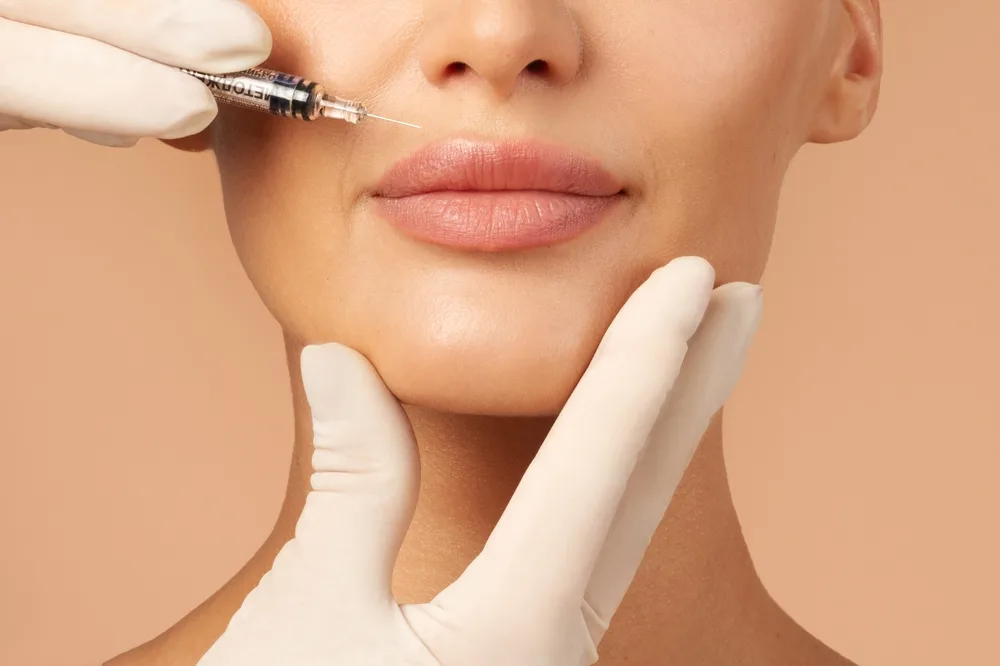
Facial change can be difficult to describe when it is more about shape than a particular wrinkle. A cheek may seem less supported, a fold beside the mouth may catch the light differently, or the lower face may look less defined than it did a few years ago. You may still like your features and want to understand whether a measured adjustment could make them feel more familiar again.
Dermal fillers can address selected concerns involving volume, contour, and facial folds. They are not interchangeable treatments for every sign of aging. The useful question is where additional support would improve the appearance and where it would introduce fullness without solving the problem.
Women’s LifeCenter Aesthetic Surgery and Medispa offers filler consultations for Skokie residents at our Wilmette practice. Elysa Fisher, MD, FACS, assesses the concern within the whole face, considering tissue quality, existing volume, previous procedures, and the degree of change you want. The aim is to identify an appropriate correction rather than decide on a quantity of filler before the examination.
Your consultation can help separate a volume concern from loose skin, movement-related creasing, or a surface issue. That distinction matters because successful treatment depends on matching the method to the cause. You should understand what filler could reasonably improve, what would remain, and what risks and maintenance are involved before choosing it. Women’s LifeCenter filler treatment
Schedule a Complimentary Consultation
Meet Your Filler Provider Near Skokie
An injectable procedure requires anatomical judgment as well as an aesthetic plan. Blood vessels, tissue layers, and nearby structures influence where a product can be placed and which risks must be discussed. Experience also matters when deciding that a particular area should not be injected.
Dr. Elysa Fisher’s education at Northwestern University included undergraduate, graduate, and postgraduate training. She has been board-certified in plastic surgery since 1992 and provides surgical as well as nonsurgical aesthetic care. This background allows a consultation to compare filler with other approaches to facial change.
For example, a client who describes a hollowed appearance may need a different discussion from someone whose main concern is tissue descending along the jaw. Both may ask about filler after seeing similar advertisements, yet adding volume has different implications in each case.
Choose a provider whose explanation you can follow. You should know which feature is being addressed, why the proposed material is appropriate, and how complications would be recognized and managed. A comfortable conversation about those details is as relevant as the appeal of a before-and-after image. Dr. Fisher’s qualifications
Understanding Facial Volume Changes
The face has shape because of several interacting structures, including bone, soft tissue, fat, and skin. Changes in those structures can alter how light falls across the cheeks and mouth. A fold may become more noticeable even when the skin surface itself has not changed dramatically.
This is why pointing only to the deepest visible line does not always describe the entire problem. The surrounding tissue can contribute to that appearance. During assessment, the clinician considers the area in relation to neighboring features rather than automatically tracing every crease with an injectable.
Weight changes may also affect how you perceive facial volume. If your weight is still changing substantially, mention that before treatment. The goal should be planned in the context of your current health and likely changes, not a promise to permanently recreate an earlier photograph.
An older picture can be useful for communicating what feels different, but it is not an exact surgical or injectable target. Aging changes several layers at once, and replacing volume cannot reverse all of them. The consultation should define which part of the change can be addressed with reasonable expectations. ASPS dermal filler overview
What Dermal Fillers Do
Dermal fillers are materials injected into appropriate tissue layers to modify selected contours or soften particular folds. Different formulations have different characteristics, such as firmness, flexibility, and intended placement. The choice depends on the correction being considered.
Hyaluronic acid is used in many temporary fillers. Other filler categories use different ingredients, and some have effects that develop through a different process. Ask for the name and type of the proposed product rather than treating the word filler as a complete description.
FDA approval is specific to a product and its studied uses. It does not mean that the same material has been approved for every area someone might choose to inject. If an off-label use is discussed, you should understand its rationale, alternatives, and risks.
Filler also differs from Xeomin or another neuromodulator. It does not primarily reduce expression-muscle activity. A dynamic forehead line and a volume-related cheek concern may therefore require different conversations, even though both treatments are administered through injections. FDA information on soft tissue fillers
A Plan Based on Proportion Rather Than Syringe Count
A syringe is a measure of product, not a measure of how much improvement your face needs. The same quantity can produce different effects depending on the material, site, tissue, and starting anatomy. Planning should begin with the goal and examination.
Describe the change that would feel worthwhile in ordinary terms. You might want a less pronounced shadow beside the mouth, more definition along part of a contour, or restoration of a modest amount of lost fullness. Also describe what you want to avoid, such as a broader-looking face or visibly enlarged lips.
The initial plan may be limited or staged. Staging can give you time to assess the settled effect and decide whether another adjustment remains important. It should be used because it serves the treatment goal, not as an automatic series of visits regardless of response.
Your face should be considered from more than one angle. A change that looks appealing from the front can appear different in profile or while smiling. Evaluating those views helps keep the recommendation connected to how the face is actually seen throughout the day.
Concerns Discussed During Filler Consultations
Changes Across the Cheeks
Cheek assessment involves more than deciding whether the area looks flat. The clinician considers projection, existing fullness, skin quality, and the relationship to the lower eyelid and mouth. Restoring selected support is different from creating a deliberately more prominent cheek shape.
Tell us whether your concern is a recent change or a feature you have always had. A request to regain familiar fullness may call for a different aesthetic conversation from a request to enhance a naturally less projected cheek.
It is also important to discuss what remains beyond filler’s reach. Significant descent or loose skin cannot be removed by adding material. If the face already feels heavy to you, more volume may be an unsuitable answer to the concern.
Folds Around the Nose and Mouth
Nasolabial folds and lines extending below the mouth can become more noticeable for different reasons. Their appearance may reflect surrounding support, movement, tissue position, or a combination. The assessment should consider the source rather than assume that filling the visible line is always the best strategy.
Normal folds also contribute to facial expression. A goal of eliminating every crease around the mouth can conflict with a comfortable, recognizable result. Discuss how much softening would satisfy you rather than treating complete flatness as the default endpoint.
When comparing photographs, use a similar expression. Smiling changes the depth and position of folds, so a relaxed after-picture can exaggerate improvement if it is compared with a broad smile before treatment.
Lip Volume and Border Definition
Lip concerns may involve overall fullness, the border, proportion between upper and lower lips, or changes that have developed with age. These are separate goals, and the treatment should not assume that all of them require enlargement.
Explain whether you want a more defined shape, restoration of lost volume, or a visible enhancement. Discuss how the lips should look at rest and in motion. The surrounding skin and smile also influence the result.
If you have had filler before, provide that history even if the treatment was a long time ago. Existing material, swelling, or an old irregularity can affect the recommendation and should be assessed before adding more.
Other Contour Questions
Some clients ask about the chin, jawline, or under-eye region after seeing a result online. Each area carries its own anatomical considerations, and not every concern is suitable for filler. A provider should explain whether the proposed location is appropriate rather than treating all facial areas as equivalent.
An under-eye shadow, for instance, may involve more than a hollow. The consultation may identify skin color, puffiness, or another feature that filler would not reliably correct. It is reasonable for the recommendation to differ from the treatment you initially requested.
When Filler May Be the Wrong Tool
Filler is not a substitute for removing substantial excess skin. It also does not treat a changing mole, an active rash, or every form of pigmentation. If the concern is primarily skin disease or a lesion, medical evaluation takes priority over cosmetic correction.
Repeatedly adding product to compensate for laxity can create an appearance that feels fuller without looking more supported. The consultation should distinguish those possibilities. A discussion of surgery does not obligate you to have surgery, but it can clarify why injections have limits.
Another situation requiring caution is uncertainty about existing filler. If the material or location is unknown, records or further assessment may be needed before treatment. A new injection should not be used to hide an unexplained lump or persistent swelling.
Choosing no treatment is also an option when the likely gain is small or the risk is disproportionate to your goal. The purpose of assessment is to identify a worthwhile intervention, not to guarantee that an injection will be recommended at every visit.
Who May Be a Candidate for Filler Treatment?
An appropriate candidate has a concern that the proposed product can reasonably address, a suitable medical history, and realistic expectations. Age requirements and contraindications vary by product, so the clinician should review the specific labeling rather than rely on a universal rule for all fillers.
Share your allergy history, bleeding problems, medications, and any previous injection reaction. Active infection or inflammation near the treatment area may require postponement. Pregnancy and breastfeeding also warrant discussion because elective filler treatment is generally deferred when safety has not been established.
Past facial procedures matter. Surgery, dental work, implants, and previous filler can influence assessment or timing. Explain what was done and whether there were complications, even if you do not think the earlier procedure is related to your current concern.
Readiness also includes accepting the possibility of bruising, swelling, and a result that may need reassessment. If a specific event leaves no room for visible recovery, a later appointment may be more practical.
You should feel able to decline or take time to decide. A satisfactory consultation gives you enough information to evaluate the tradeoffs without making you feel that all age-related changes require correction.
Your Filler Consultation Near Skokie
Begin by identifying the change you want addressed and why it matters to you. If the concern appears mainly in photographs, explain whether it also bothers you in the mirror or during conversation. Camera angle and lighting can emphasize features differently from ordinary viewing.
The examination assesses facial proportions, skin and soft tissue, previous treatment, and natural asymmetry. Your medical history helps establish suitability. The clinician may use photographs as a baseline, with attention to consistent positioning rather than flattering one image more than another.
Ask which product would be used, what it is intended to accomplish, and whether the proposed location is an approved use. You should also understand the likely settling period, expected duration, and any special risks related to the site.
Discuss quantity in the context of the intended correction. If more than one session is proposed, ask what would determine whether the next session is actually necessary. A staged plan should include a point for reassessment rather than a commitment to keep adding product.
Before scheduling, clarify the total fee and what follow-up includes. Also ask how urgent symptoms are handled. Those questions help you evaluate the complete care arrangement, not just the appeal of the initial cosmetic result. ASPS filler consultation
Preparing for Cosmetic Filler Injections
Provide a complete list of medicines and supplements. If you take a prescribed blood thinner or another medication that affects bleeding, do not stop it on your own. Any adjustment should be coordinated with the clinician responsible for your medical treatment.
Tell the practice about a history of cold sores when lip treatment is being considered. Preventive medication may be discussed when appropriate. Report new skin irritation, infection, recent illness, or dental concerns before the appointment so the timing can be reconsidered if needed.
Ask how upcoming dental procedures or other facial treatments should be scheduled relative to filler. There is not one rule that substitutes for knowing your circumstances and the particular procedure. Giving the team the dates in advance is more useful than mentioning them after treatment.
Plan for possible bruising and swelling. If you are trying filler for the first time, allow a generous interval before an occasion where appearance matters. The initial result is not always the settled result, and a deadline should not encourage unnecessary early adjustment.
Bring your questions in writing if that helps. It is easy to forget a practical concern about work, exercise, or travel once an appointment begins. Preparation should leave you informed, not simply ready to receive an injection.
During the Treatment Visit
The clinician confirms the plan, reviews consent, and prepares the skin. Appropriate comfort measures depend on the site and product. Some fillers include local anesthetic, but that does not eliminate the need to discuss allergies or your sensitivity to injections.
The product is placed with a needle, cannula, or another appropriate technique according to the plan. Placement depth and location depend on anatomy and the intended correction. A cannula may be selected for certain purposes, but it does not make vascular complications impossible.
Assessment can occur throughout the procedure rather than only at the end. The clinician may compare sides or views and pause to evaluate the effect. The objective is an appropriate correction, not necessarily using every available amount of material.
You should report unusual pain, a sudden visual symptom, or another unexpected sensation immediately. Do not assume that discomfort must be tolerated because injections can sting. Prompt communication allows the clinician to evaluate a change while you are still in the office.
Before leaving, confirm the product used and the aftercare plan. Keep the treatment information somewhere accessible for follow-up and for future medical care.
Recovery and the Settling Period
Early Swelling and Bruising
Redness, tenderness, bruising, and swelling are possible after filler. Their degree varies with the location, product, technique, and individual response. Some early fullness can therefore reflect the procedure rather than the final amount of correction.
Follow your clinician’s guidance about cold compresses, activity, and skin care. Do not apply strong pressure or begin massage unless you have been specifically instructed to do so for the product and concern involved.
Assessing the Appearance
The timing of review depends on the material and treatment site. Many temporary effects settle over days to weeks, but you should ask for the expected course in your case. A fixed online timetable cannot determine whether a particular change is normal.
Photograph a concern clearly if the office asks, but report urgent symptoms immediately rather than waiting for a routine comparison photo. Aesthetically uneven swelling and impaired blood flow require very different responses.
Returning to Your Usual Routine
Light tasks may be possible relatively soon, while vigorous exercise or activities pressing on the area may need to wait. Discuss glasses, face-down massage, helmets, or other pressure relevant to your life. Aftercare is most useful when it addresses what you actually do. ASPS filler recovery
How Long Filler Results May Last
Duration depends on the product, treated area, amount, and individual response. There is no single reliable interval for every filler or facial region. Ask for an estimate tied to the material being proposed, along with an explanation of how maintenance would be assessed.
The visible benefit fading does not always mean no material remains. This is one reason follow-up should involve examination rather than automatically repeating an old quantity on a calendar schedule. Existing treatment needs to be considered before more is added.
Your preference may change as well. You may decide that the first correction was enough, that you prefer a smaller effect in the future, or that maintenance no longer fits your budget. These are valid parts of ongoing care.
A useful long-term plan includes records of the product, location, and response. If you change providers, that history gives the new clinician a clearer starting point. Continuity of information matters even when the original appointment seemed simple. ASPS filler results
Safety, Complications, and When to Seek Help
Common injection effects include swelling, tenderness, redness, and bruising. Other complications can involve infection, nodules, prolonged inflammation, asymmetry, migration, or an unsatisfactory contour. Some reactions appear after the initial recovery period.
The most serious risk is unintended injection into a blood vessel, which can obstruct circulation. Tissue damage, permanent visual injury, blindness, or stroke can result. Although uncommon, these possibilities belong in the consent discussion for filler treatment.
Severe or unusual pain, skin that turns pale, gray, dusky, or mottled, and changes in vision require immediate medical attention. Contact the treating clinician urgently for suspected circulation problems. Sudden visual loss or stroke symptoms are emergencies; call 911 and alert the practice without delaying emergency care.
Some hyaluronic acid fillers can be reduced with hyaluronidase, but this does not make treatment risk-free. The enzyme has its own considerations, may require repeat treatment, and cannot be assumed to reverse every complication. Other filler types may be difficult or impossible to remove fully.
Know the response plan before treatment. You should receive contact instructions and understand which symptoms cannot wait for a scheduled review. Appropriate aftercare includes recognizing a problem, not just protecting the cosmetic appearance. FDA filler risks and patient guidance
Maintaining a Result Without Overcorrection
The decision to repeat filler should begin with the current face, not the memory of how many syringes were used last time. Some features may still have adequate correction while another concern has become more important. An updated assessment helps avoid treating by habit.
Consider the face as a whole after the initial settling period. Ask whether the original shadow, fold, or contour concern has improved enough. An additional small change may be possible without being necessary, and the potential benefit should still justify the added treatment.
It can be helpful to keep a simple record of what you liked about the result. For example, you may appreciate improved definition but prefer less projection in a future session. Specific observations are more actionable than a general request to look refreshed.
You can also stop. Aesthetic maintenance is a choice, and a pause does not require an immediate replacement procedure. If you are unsure whether to continue, a review can focus on assessment alone.
Why Choose Women’s LifeCenter for Filler Near Skokie?
Filler decisions benefit from a practice that can explain both the possibilities and the limits of adding volume. Women’s LifeCenter offers a setting where the conversation can include injectables, skin care, and surgery when relevant, rather than assuming every concern has the same solution.
Dr. Fisher’s surgical training informs the assessment of facial relationships and the distinction between volume change and tissue descent. Her emphasis on education supports a plan that you can understand before committing to it.
Your preferences should remain central throughout the process. Wanting restoration rather than enlargement, choosing a staged approach, or deciding to leave a normal fold alone are all meaningful treatment choices. A recommendation should respect those boundaries.
For Skokie clients, the Wilmette location supports consultation and follow-up within the surrounding community. Ask questions about the full process so the decision reflects confidence in the care arrangement as well as interest in the potential result.
Visiting Our Wilmette Office From Skokie
Women’s LifeCenter Aesthetic Surgery and Medispa is located at 124 1/2 Skokie Blvd, Wilmette, IL 60091. Clients from Skokie visit the Wilmette office for assessment, appropriate treatment, and review of their results.
When booking, mention whether you have existing filler or are considering it for the first time. If you have a history of complications, ask how to provide those records before the consultation. Giving the team that context can make the appointment more useful.
Schedule with follow-up access in mind, especially if you will be traveling. The convenience of the injection date is only one part of planning a medical procedure.