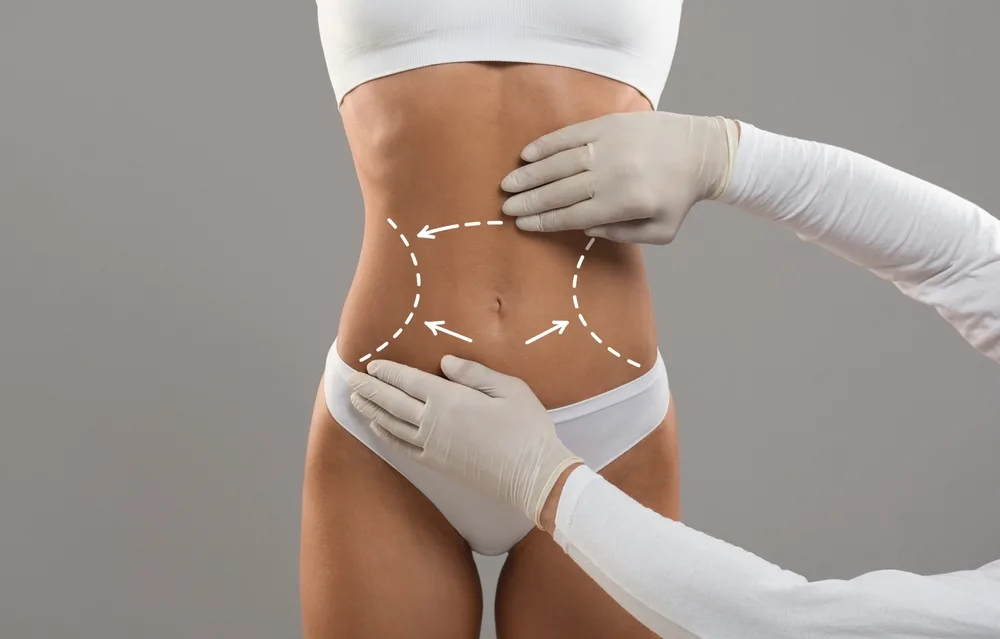
Losing weight can change your health, energy, and relationship with your body. It can also leave behind skin that no longer fits your shape. A fold across the abdomen, loose tissue along the thighs, or skin that gathers beneath clothing may remain even after your weight has stabilized. For some people, these changes are mainly visual. For others, they complicate exercise, hygiene, and the simple experience of getting dressed.
Body contouring surgery addresses selected areas of excess skin and localized fat. The term describes a group of operations, so the first question is which part of your body needs attention and what is causing the concern. Removing hanging skin requires a different approach from reducing a pocket of fat beneath otherwise firm skin.
Women’s LifeCenter Aesthetic Surgery and Medispa welcomes patients from Chicago to our Wilmette practice for individualized surgical planning with Elysa Fisher, MD, FACS. Your goals, weight history, skin quality, and ability to recover all help determine an appropriate recommendation. A smaller operation, a staged approach, or additional preparation may make more sense than treating several areas together.
The aim is a contour that feels more comfortable and proportionate to your body today. Surgery involves scars and recovery, and understanding those tradeoffs is an essential part of deciding whether the expected improvement is worthwhile for you.
Schedule a Complimentary Consultation
Why Skin Can Remain Loose After Weight Changes
Skin expands as the body grows, but its ability to contract varies. Age, genetics, the amount of stretching, pregnancy, and the length of time spent at a higher weight all influence elasticity. After substantial weight loss, the underlying volume may decrease faster than the skin can adapt. Exercise can strengthen muscle and support health, but it cannot reliably remove an established fold of redundant skin.
It helps to separate loose skin from residual fat because they behave differently. Skin may hang, wrinkle, or fold when you bend, while fat creates fullness beneath the surface. Many patients have both. An examination can identify which tissue contributes most to a concern and whether skin removal, liposuction, or a combination offers the most useful change.
What Surgical Body Contouring Can Address
Body contouring may focus on the abdomen, thighs, or other regions affected by tissue laxity. An abdominal procedure can remove a lower skin apron; a thigh lift can improve hanging tissue along the inner legs. The right operation depends on how far the looseness extends and how the area connects to neighboring contours. A concern that appears isolated from the front may continue around the sides.
Patients often describe practical goals such as clothing lying more smoothly or less skin gathering during movement. These are useful starting points for a consultation. Surgery cannot promise a particular clothing size, eliminate every crease, or create perfectly even contours. Cellulite, stretch marks outside the removed skin, and natural asymmetry may remain. Identifying those limits early keeps the proposed treatment focused and realistic.
Skin Removal and Liposuction Serve Different Purposes
Liposuction removes selected fat through small access incisions. It depends partly on the surrounding skin adapting to a smaller underlying volume. When elasticity is good, that may be enough to improve a localized bulge. When skin is already loose, removing additional fat without addressing the skin may leave the area looking deflated or more wrinkled.
Skin removal procedures physically excise redundant tissue and close the remaining skin into a revised contour. Their incisions are longer because meaningful amounts of skin cannot pass through a tiny opening. Liposuction may complement an excisional operation in selected patients, but it is not an automatic addition. Preserving circulation, limiting operative stress, and choosing useful treatment boundaries matter more than adding another technique.
Reaching a Stable Starting Point
Body contouring is generally considered when your weight is reasonably stable and you can sustain the habits supporting it. Continuing weight loss may create further looseness after surgery, while substantial weight gain can stretch the result. There is no single number on the scale that determines readiness for everyone. Your weight pattern, overall health, body composition, and planned procedure all deserve consideration.
Nutrition is especially relevant after major weight loss or bariatric surgery. A person can be close to a desired weight and still have deficiencies that interfere with healing. Tell Dr. Fisher about prior weight loss procedures, appetite changes, supplements, and any prescribed weight management medication. Laboratory evaluation or coordination with another clinician may be needed before a surgical date is appropriate.
Deciding Which Area Comes First
When several areas bother you, choosing a priority can make the process more manageable. Think about which concern affects your daily comfort most, which improvement matters most in clothing, and how much recovery you can realistically accommodate. These priorities may not all point to the same operation, so discussing them openly helps create a plan that reflects your life.
Staged surgery can be appropriate when treating multiple regions would create an overly lengthy operation or difficult recovery. Separating procedures may also allow you to evaluate the first result before deciding what else you want. The tradeoff is more than one recovery period. Combining procedures may be reasonable in selected circumstances, but convenience alone does not determine whether a combination is advisable.
Your Body Contouring Consultation With Dr. Fisher
At the consultation, you can show where clothing catches, where tissue rubs, or which contour changes feel most distracting. Dr. Fisher will assess skin distribution, underlying fullness, existing scars, and the relationship between the areas you would like improved. Previous abdominal operations and changes in sensation should be mentioned, even if the scars seem unrelated to your current concern.
The conversation also covers your health history, nicotine exposure, medications, past healing, and any personal or family history of blood clots. Ask to see where proposed incisions would run and how far the improvement is likely to extend. A useful surgical plan should explain the expected benefit, the parts it will leave unchanged, and the practical responsibilities that follow the operation.
Preparing Your Home and Schedule
Recovery preparation includes more than taking days away from work. Depending on the treatment area, you may need help getting dressed, carrying groceries, managing pets, or caring for children. Put frequently used items within easy reach and arrange transportation for surgery and early appointments. If you live in Chicago, allow for the actual trip to follow-up visits in Wilmette instead of assuming you will be ready to drive immediately.
Medication and fasting instructions come from your surgical team. Provide a complete list of prescriptions, over-the-counter products, and supplements rather than stopping them on your own. Nicotine use needs specific discussion because it can compromise healing. Planning these details before surgery helps prevent last-minute changes and gives your support person a clearer understanding of what assistance you may need.
The Procedure and Early Recovery
The operative setting, anesthesia, and length of surgery depend on the selected procedure and its extent. Before surgery, markings help define the planned skin removal and contour transitions. During the operation, excess tissue is removed and the remaining tissues are shaped and closed. Drains or compression garments may be part of the plan, but their use varies rather than following one rule for every patient.
Expect an early period of soreness, swelling, bruising, and reduced stamina. You may be able to move around at home while still needing significant limits on lifting, stretching, or prolonged activity. Short, permitted walks are different from returning to workouts. Your team will explain how to protect the incisions while remaining appropriately mobile and when to progress toward more demanding tasks.
How Your New Contour Develops
Changes can be apparent early, but swelling can disguise definition and make an area temporarily feel firm or uneven. A fitted garment may also change how your shape looks during this stage. Compare progress over weeks and months rather than repeatedly judging the result throughout a single day. Follow-up visits allow the healing tissues to be assessed in context.
Scars usually change for many months and may remain pink, dark, raised, or firm before settling. Their final appearance depends on location, skin characteristics, tension, and healing. Scar care begins when the incision is ready for it, not simply when a product label suggests. Maintaining a stable weight and protecting healing skin from sun exposure support the result, although aging continues and later changes remain possible.
Risks to Understand Before Proceeding
Potential complications include bleeding, infection, fluid collections, wound separation, tissue loss, altered sensation, persistent swelling, conspicuous scars, and contour irregularities. Additional surgery may be needed to address a complication or an unsatisfactory contour. Anesthesia complications and blood clots are also possible, and the risks increase or decrease according to the individual and the scope of the operation.
You will receive instructions for contacting the surgical team about unexpected changes. Increasing redness, drainage, fever, or pain that is worsening rather than improving deserves prompt attention. Sudden shortness of breath, chest pain, or a swollen painful calf requires urgent medical evaluation. Knowing the difference between expected recovery and concerning symptoms is part of being prepared, not a reason to manage symptoms alone.