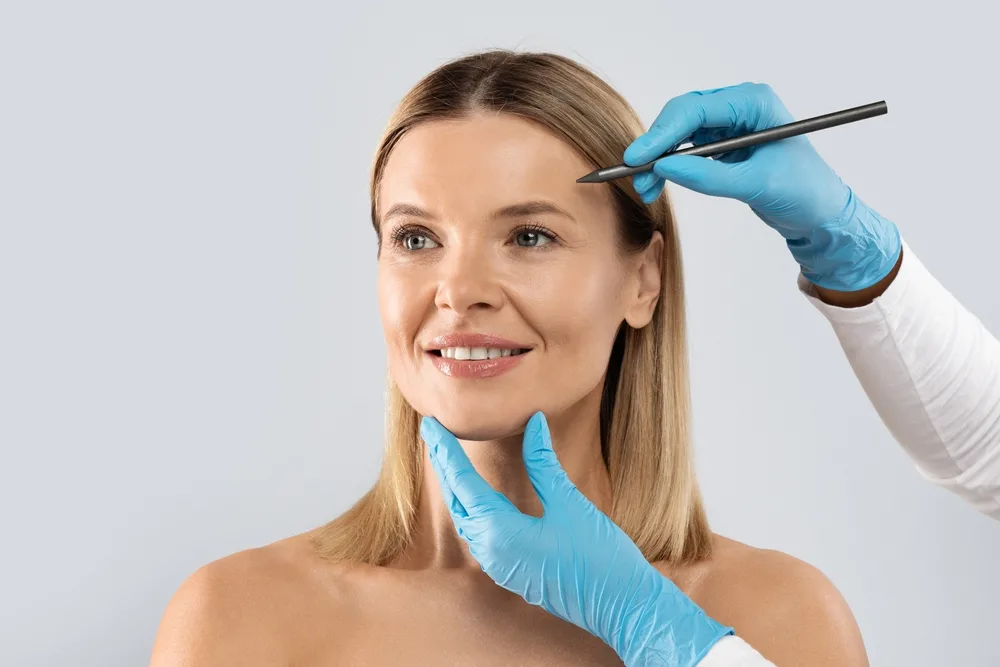
You may notice your eyebrows sitting lower in photographs, the outer corners of your eyes looking heavier, or an expression that seems more serious than you feel. Sometimes the change is subtle enough that it is difficult to name. You simply find yourself lifting your forehead to open the eye area, especially when applying makeup or looking in the mirror.
A forehead lift, also called a brow lift, raises selected brow tissues to improve their position and the appearance of upper facial heaviness. Its purpose is not to make every forehead smooth or every eyebrow highly arched. A considered approach respects your natural brow shape, hairline, and the expressions that make your face familiar.
For patients exploring a forehead lift in the Chicago area, Women’s LifeCenter Aesthetic Surgery and Medispa offers consultations with Elysa Fisher, MD, FACS, at our Wilmette office. The assessment looks at the brows and eyelids together because an apparently heavy eyelid can have more than one cause.
Understanding those causes helps determine whether a brow procedure, eyelid surgery, another treatment, or no surgery is the most appropriate next step. The recommendation should follow your anatomy and goals rather than a general desire to look younger.
Schedule a Complimentary Consultation
How Brow Position Changes the Eye Area
The brows frame the eyes, and even a modest downward shift can affect how open the upper face appears. Skin may gather near the outer eyelid because the brow above it has descended. Some people compensate by keeping the forehead muscles engaged, which can create or deepen horizontal lines. The resulting appearance may combine brow heaviness, eyelid folds, and movement-related wrinkles.
Not all low brows are caused by aging. Your original facial structure and inherited brow position also matter. A brow that sits relatively low can be entirely natural and appropriate for your face. Surgery should therefore be planned around the feature you want improved and the balance of the whole upper face, not an assumed ideal distance or arch that applies to everyone.
What a Forehead Lift Can Change
A brow lift can reposition descended tissue and reduce selected hooding caused by brow descent. Depending on the technique and the tissues involved, it may also improve some forehead or frown-line concerns. The degree of correction is individualized. Small changes in brow position can alter expression, which makes thoughtful planning especially important in this region.
The operation does not erase every wrinkle or correct all eyelid problems. Fine skin lines, sun damage, true upper eyelid drooping, and lower eyelid bags may require different evaluation or treatment. If your main concern is a line rather than a change in position, a less invasive option may be more relevant. An examination identifies which layer of the problem is actually contributing to what you see.
Brow Lift, Eyelid Surgery, and Eyelid Ptosis
Upper blepharoplasty removes selected excess eyelid skin and sometimes addresses associated tissue. A brow lift changes the position of the tissue above the eyelid. When both areas contribute to heaviness, considering them together can prevent too much being expected from either operation. Removing eyelid skin alone does not reliably correct a low eyebrow, and lifting a brow does not remove all eyelid excess.
True eyelid ptosis is different again: the eyelid margin itself sits lower than it should because of its lifting mechanism. It may require a separate type of repair. During consultation, Dr. Fisher assesses brow position, eyelid skin, and the way the lids move. An eye examination or collaboration with another specialist may be appropriate when symptoms or findings indicate a functional eye problem.
Planning a Result That Preserves Your Expression
The most useful description of your goal may be that you want to look less tense, less heavy around the eyes, or more like yourself in earlier photographs. Bring those descriptions into the conversation. A high arch that looks attractive on one person can appear unnatural on another. The desired result should account for your facial proportions and the way your brows move when you speak.
Existing asymmetry is also important. One eyebrow may naturally sit higher, or you may activate one side of the forehead more than the other. Surgery can improve selected differences, but exact symmetry is not a realistic promise. Identifying those patterns beforehand helps explain what can change and what may continue to be part of your normal expression.
Surgical Approaches and Hairline Considerations
Forehead lifts can be performed through different incision patterns, including approaches within the scalp or near the hairline. Some techniques use smaller access incisions and an endoscope, while others provide more direct access to the tissue. These options are not interchangeable for every patient. Hairline height, hair density, skin excess, and the amount and direction of lifting influence the choice.
Ask how the proposed approach may affect your hairline and where a scar could be visible when you wear your hair back. A technique that works well for a low hairline may not suit someone with a high forehead or thinning hair. Dr. Fisher can explain the method appropriate to your anatomy without treating a particular technique name as a guarantee of a better or more natural result.
When an Injectable May Be Enough
Muscle-relaxing injections can soften selected expression lines and may create a modest temporary change in brow balance for suitable patients. They do not remove excess skin or offer the same degree of repositioning as surgery. The response also depends on muscle activity, and an inappropriate treatment pattern can make the brow feel heavier rather than more open.
If you have used neurotoxin treatments, tell Dr. Fisher when and where they were placed. Recent injections can temporarily change the resting position of the brows and influence the examination. Photographs from before treatment may be helpful. Discussing your treatment history allows the recommendation to account for the underlying anatomy rather than only the temporary appearance at the appointment.
Your Consultation at Women’s LifeCenter
The consultation explores what you notice in the mirror, how long it has bothered you, and how much change you would feel comfortable seeing. Dr. Fisher will review previous facial procedures, eye symptoms, medical conditions, and medications. Dryness, visual changes, difficulty closing the eyes, or a history of facial nerve problems should be mentioned even if your interest in surgery is primarily cosmetic.
You can expect a conversation about incision location, realistic brow movement, possible combined procedures, and the stages of recovery. Ask whether the concern is truly in the forehead or whether another area is contributing more. An explanation that makes anatomical sense can be more reassuring than a dramatic before-and-after photograph, especially when your goal is a subtle adjustment.
Getting Ready for the Procedure
Preparation may include medical assessment, photographs, and instructions tailored to the planned anesthesia and surgery. Review all medications and supplements with the team, including products taken only occasionally. Do not independently discontinue a prescribed blood thinner or other essential treatment. Any changes should be coordinated with the clinician responsible for that medication.
Set aside time for visible bruising and swelling, even if you expect to feel physically comfortable sooner. Arrange transportation and early assistance, and discuss how you will wash your hair and protect the incisions. Chicago patients should account for follow-up visits in Wilmette when planning their calendar. It is easier to make those arrangements before surgery than while managing postoperative fatigue.
What Early Recovery May Feel Like
After a forehead lift, the scalp and brow region can feel tight, swollen, numb, or tender. Bruising may move toward the eyelids as swelling changes. Temporary differences between the two sides can occur, and the brows may initially appear more elevated than their eventual position. These early observations need to be interpreted in the context of the technique and healing stage.
Your instructions may address head elevation, incision care, hair washing, and limits on bending or exertion. Avoid placing unapproved products on healing skin or manipulating the brows to test their position. Increasing pain, marked one-sided swelling, fever, drainage, or any new vision symptom requires prompt contact with the surgical team; severe or sudden visual changes need urgent medical evaluation.
Returning to a Public-Facing Routine
The timing of returning to work is partly a physical question and partly a question of visible recovery. Someone who can work quietly at home may have different needs from someone who meets clients, teaches, or appears on camera. Discuss both when making plans. Makeup, hairstyle choices, and sunglasses may have limitations while incisions or sensitive tissues are healing.
Strenuous exercise, heavy lifting, and activities that raise pressure in the face usually require a longer pause than light daily tasks. Clearance should come from the surgical team rather than from whether the bruising has faded. If an important event is approaching, leave room for individual variation. A fixed social deadline is not a reliable measure of when tissues will be ready.
Risks and the Longer View
Potential risks include bleeding, infection, poor scarring, hair loss near an incision, altered sensation, persistent numbness, and changes in hairline position. Nerve injury can affect forehead movement. Asymmetry, excessive or insufficient elevation, and the need for revision are also possible. Your medical history and the selected surgical approach influence the details of the risk discussion.
As swelling resolves, the result becomes easier to assess, while scalp sensation and scars may continue changing for months. Aging continues after a successful lift, and some descent can recur over time. Surgery is intended to improve position at the time of treatment, not to make the face stop changing. Long-term decisions can be based on how the tissues evolve and what continues to matter to you.