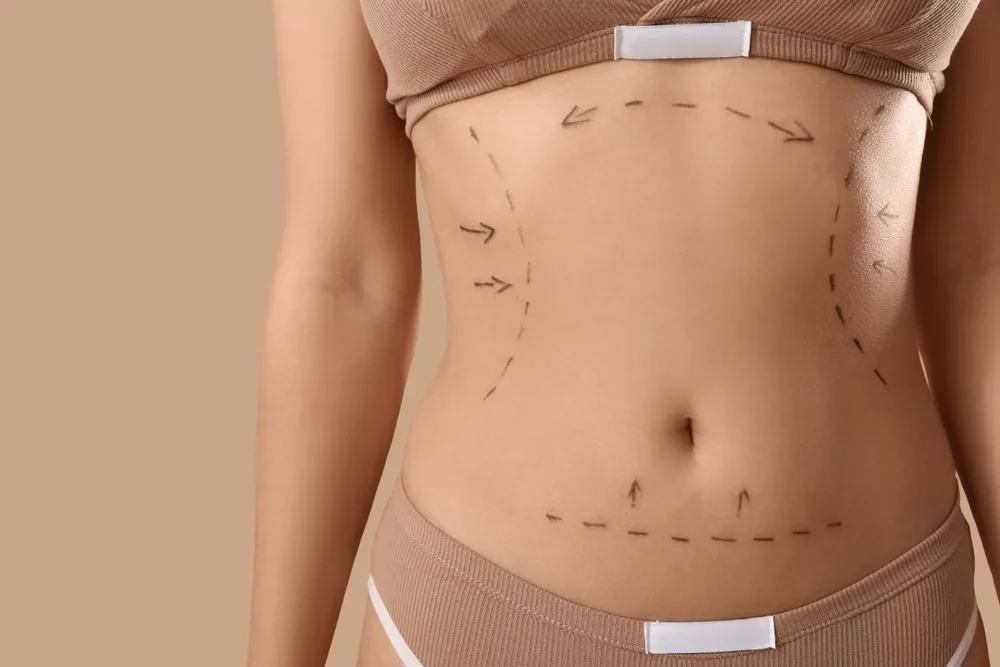
A lower abdominal fold can remain after pregnancy, weight loss, or years of regular exercise. You may feel stronger and healthier while still finding that extra skin gathers above a waistband or changes how dresses and fitted tops hang. For some people, the main concern is a skin apron. For others, the abdomen continues to project because its supporting tissues have stretched.
Abdominoplasty, commonly called a tummy tuck, removes excess abdominal skin and reshapes the area. When appropriate, the operation also repairs laxity in the connective tissue covering the abdominal muscles. These changes can improve the contour in ways that exercise alone may not be able to achieve when substantial tissue stretching is present.
Elysa Fisher, MD, FACS, sees patients from Chicago at Women’s LifeCenter Aesthetic Surgery and Medispa in Wilmette. A tummy tuck consultation examines the cause of the abdominal change and the extent of correction that would be useful for your body.
The decision includes more than the appearance of a flatter abdomen. Scar placement, navel shape, recovery support, future pregnancy plans, and the possibility of complications all deserve consideration. Understanding the full procedure helps you decide whether its benefits match what you want from surgery.
Schedule a Complimentary Consultation
Why the Abdomen May Not Return to Its Earlier Shape
The abdominal skin and supporting tissues adapt during pregnancy and weight change, but they do not always return to their previous dimensions. Skin can remain stretched after the volume beneath it decreases. The connective tissue between and over the abdominal muscles may also become more lax, contributing to a central bulge even when the muscles themselves are active and strong.
An exercise program can improve conditioning and may help some functional concerns, but it cannot physically remove an established area of extra skin. Likewise, a skin cream cannot repair significant abdominal wall laxity. Recognizing these limits does not diminish the value of healthy habits. It simply separates what those habits can influence from the tissue changes that may require a different approach.
What a Tummy Tuck Actually Does
During abdominoplasty, a planned segment of excess skin and underlying tissue is removed, and the remaining skin is redraped to create a smoother abdominal surface. The operation can also include tightening of the abdominal fascia, the strong connective tissue layer associated with the muscles. This is often referred to as muscle repair, although the correction is not achieved by shortening the muscle fibers themselves.
The procedure does not remove internal abdominal fat around the organs or treat every cause of abdominal enlargement. A firm protruding abdomen may have contributors that skin removal cannot resolve. Hernias, pain, unexplained swelling, or digestive symptoms should be evaluated on their own merits. A cosmetic goal should never replace an appropriate assessment of an underlying medical concern.
Full and Limited Abdominoplasty
When a Full Tummy Tuck May Be Considered
A full abdominoplasty can address excess skin across a broader portion of the abdomen and may include repair above and below the navel. It usually involves a lower abdominal incision and an incision around the navel. The navel generally remains connected to the abdominal wall while the surrounding skin is moved and a new opening is created for it.
When a More Limited Procedure May Fit
A limited or mini tummy tuck may suit selected patients whose concern is concentrated below the navel. It does not provide the same access or correction as a full procedure. The word “mini” should not be interpreted as universally better, scarless, or suitable for all lower abdominal folds. The choice depends on the location of looseness and the amount of repair required.
Planning the Lower Abdominal Scar
The main incision is commonly placed low on the abdomen, but its final position and length depend on your anatomy and the skin being removed. A longer fold may need a longer incision to create a smooth transition at the sides. Existing scars can influence the plan, including whether a prior cesarean scar lies within the tissue scheduled for removal.
It is useful to bring an example of the underwear or swimwear style you usually wear. That can inform the discussion about coverage, although no placement can guarantee concealment in every garment. The scar is permanent and may be visible above or below a particular waistband. Choosing an incision means balancing coverage, contour, tissue tension, and the amount of skin that needs attention.
The Navel and the Upper Abdomen
Patients often concentrate on the lower fold, but the navel and upper abdomen influence whether the result looks balanced. In a full tummy tuck, care is taken to preserve a suitable navel position and create a natural-looking opening in the redraped skin. The appearance continues to change as swelling decreases and the surrounding scar softens.
Stretch marks may be removed if they lie within the excised skin, but those elsewhere remain. Some may shift position as the skin is moved. A tummy tuck also cannot eliminate every fold that appears when sitting or bending. The abdomen still needs enough flexibility for normal movement, so an entirely crease-free surface in every position is not a realistic surgical objective.
Pregnancy, Weight Stability, and Timing
Future pregnancy can stretch the skin and abdominal repair again. For that reason, completing planned pregnancies is often a practical consideration before abdominoplasty. If your plans are uncertain, discuss that openly. The decision should reflect the likelihood of future changes and how important the current concern is to you, rather than an assumption about where you should be in life.
A reasonably stable weight also helps define a more durable starting point. Large changes afterward may alter the contour or create additional loose skin. If you are still losing weight, recovering nutritionally, or adjusting a medical treatment plan, more preparation may be recommended. The consultation can identify what readiness would look like without requiring you to arrive with every detail already resolved.
Your Abdominal Assessment With Dr. Fisher
Dr. Fisher will evaluate skin excess, abdominal wall support, fat distribution, the navel, and any scars from previous operations. Tell her about prior hernias, abdominal procedures, unusual pain, and changes that occur with coughing or straining. A suspected hernia may require additional assessment or coordinated care because its treatment is distinct from ordinary cosmetic tightening.
Your discussion should include clotting history, nicotine use, medications, and the amount of help you can arrange at home. Ask whether fascial repair is part of the proposed operation and how that affects recovery. You should also understand what a tummy tuck alone is expected to change and whether any surrounding fullness lies outside its treatment area.
Making Space for Recovery
A tummy tuck can temporarily make routine movements more demanding. Getting out of bed, standing from a low sofa, or lifting a child may strain the abdomen. Arrange assistance with childcare, pets, groceries, and household tasks before surgery. The person helping you should know the restrictions and should not assume that improved comfort means you are ready to resume lifting.
Plan your work leave around the real demands of your job. A long commute into Chicago, prolonged standing, or lifting supplies can require more recovery than short periods of computer work at home. Follow-up visits at our Wilmette practice are part of the schedule as well. Leaving room for slower-than-expected healing is more practical than building a plan around the earliest possible return date.
Surgery Day and the Initial Healing Period
The operative plan determines the anesthesia, surgical setting, and whether observation beyond the immediate recovery period is needed. Markings are made before surgery to guide skin removal and closure. After the operation, dressings, an abdominal support garment, and drainage tubes may be used. Your team will explain the purpose of each and how to manage them at home.
Early swelling, tightness, bruising, and fatigue are expected. You may be instructed to rest in a position that reduces tension on the incision and to straighten gradually as advised. Brief, gentle walking is different from exercise and can be part of the recovery plan. Prolonged bed rest and pushing through strenuous activity are both poor substitutes for following individualized movement instructions.
Restoring Activity Without Rushing the Repair
The abdominal wall participates in many activities that do not look like an ab workout, including carrying bags, pushing a heavy door, and bracing while standing up. Restrictions therefore extend beyond crunches or planks. Ask about the tasks that matter in your household and workplace so you know which ones to delegate and which can be modified.
As healing progresses, activity is increased according to the condition of the incisions and any underlying repair. Swelling may fluctuate after a busier day, and numbness can persist longer than soreness. Core strengthening, heavy resistance work, and high-impact exercise should wait for clearance. Returning gradually gives you a chance to notice how your body responds instead of jumping directly back to your former routine.
Risks and the Need for Follow-Up
Abdominoplasty can involve bleeding, infection, fluid collections, wound separation, tissue loss, numbness, unfavorable scars, asymmetry, and persistent contour irregularities. Blood clots and serious anesthesia or cardiopulmonary complications are also possible. Medical conditions, nicotine exposure, the extent of surgery, and prior operations can influence the risk profile. Additional treatment or surgery may be needed if a complication occurs.
Attend the recommended visits even if you feel that recovery is going well. Contact the surgical team for a sudden change in swelling, worsening redness, drainage, fever, or pain that is increasing. Shortness of breath, chest pain, or a painful swollen calf requires urgent medical attention. Recovery instructions should leave you knowing both how to care for the incision and how to obtain help when something changes.