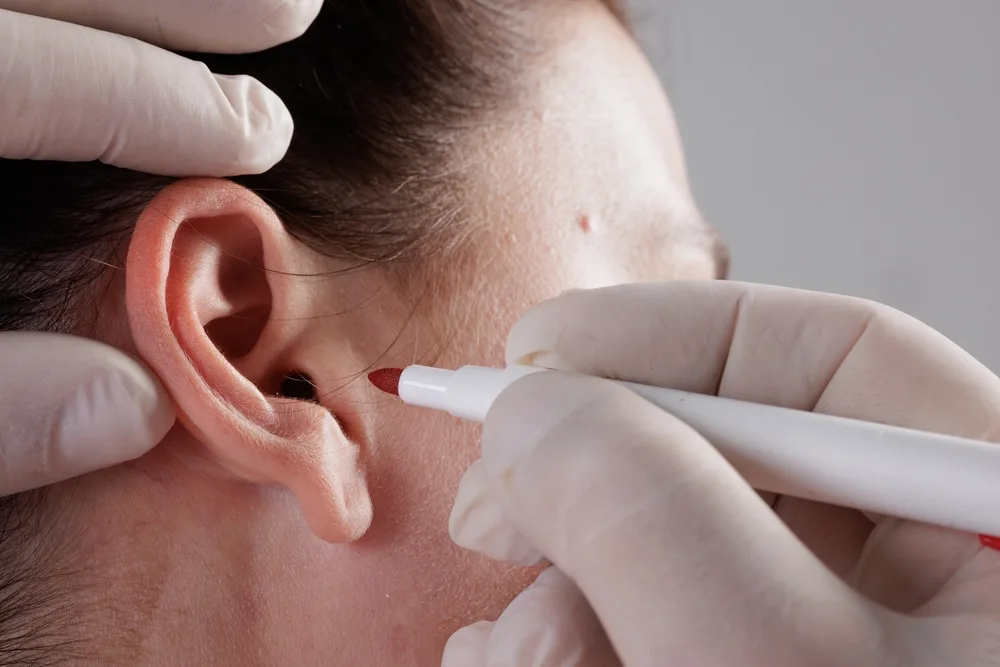
The position of your ears may be something you notice only in certain photographs, or it may influence how you wear your hair every day. One ear might project more than the other, or both may sit farther from the head than you prefer. These differences can be present for many years without causing a medical problem, yet still feel personally significant.
Otoplasty changes selected aspects of the outer ear’s shape or position. It may bring a prominent ear closer to the head, refine a cartilage fold, or improve a particular asymmetry. The operation is tailored to the reason the ear appears prominent, because the same outward appearance can arise from different structural features.
At Women’s LifeCenter Aesthetic Surgery and Medispa, Elysa Fisher, MD, FACS, offers consultations for Chicago-area patients at our Wilmette practice. The discussion begins with what you would like to change and which natural features you want to preserve.
An appropriate goal is a more balanced relationship between the ears and the face. Otoplasty does not need to make the ears appear identical, unusually small, or pressed tightly against the head. Careful planning considers how they look from the front, side, and back, as well as how they will heal.
Schedule a Complimentary Consultation
Why Ears Can Appear Prominent
The outer ear is shaped by cartilage covered with skin. One common contributor to prominence is a less-defined antihelical fold, the inner curved ridge that helps shape the upper ear. Another is a relatively deep or prominent conchal bowl, the central cup of cartilage near the ear canal. The position of the earlobe can also affect the overall outline.
These features may occur alone or together. Simply moving the ear backward without accounting for the underlying shape can leave an unnatural contour or fail to address the main concern. During the examination, Dr. Fisher evaluates which structures contribute to projection and how the upper, middle, and lower portions relate to one another.
What Otoplasty Can and Cannot Change
Otoplasty can improve selected cartilage contours and adjust the angle between the ear and head. It may also reduce certain differences between the sides. The exact change depends on your anatomy and the technique chosen. An ear can look less prominent without every part of it moving by the same amount, and the two ears may require different adjustments.
The operation treats the external ear’s appearance; it is not a treatment for hearing loss or an inner ear condition. It also does not automatically make the entire ear smaller. If size, a damaged earlobe, or a congenital difference is your primary concern, identify it specifically so the consultation can address whether ordinary otoplasty is the relevant procedure.
Keeping the Result Balanced With Your Face
Ears naturally have curves, shadows, and some projection. Placing them too close to the scalp can flatten those relationships and look less natural. A balanced correction considers the visibility of the ear rim from the front and the way the cartilage folds appear from behind. The desired result should suit your face rather than conform to a single measurement.
Bring up situations in which the ears bother you most, such as wearing a ponytail, having a short haircut, or being photographed straight on. Those examples help communicate the concern without requiring a technical explanation. If you have reference images, use them to show a general preference, recognizing that another person’s ears and head shape are different from yours.
Surgical Techniques Depend on the Cartilage
Otoplasty may use carefully positioned internal sutures to create or reinforce a fold, adjust the relationship of the conchal cartilage to the head, or support another planned change. In some cases, cartilage is reshaped or a selected portion is removed. The firmness of the cartilage, skin coverage, and degree of correction affect which steps are useful.
The incision is commonly placed behind the ear, although the exact access depends on the procedure. Internal sutures may remain as part of the structural support. Ask Dr. Fisher to explain whether your plan primarily involves folding, repositioning, tissue removal, or a combination. Understanding the intended change is more useful than choosing a method only because it is described as minimally invasive.
Addressing One Ear or Unequal Prominence
It is common for ears to differ in projection, size, or shape before surgery. Sometimes only one side needs treatment; in other cases, adjustments on both sides provide better balance. Treating the more prominent ear does not guarantee a perfect match because the underlying cartilage dimensions and facial structure may still differ.
Your consultation should identify the asymmetries that can reasonably improve and those likely to remain. Small differences are a normal part of appearance, and they may become more noticeable when you begin examining the ears closely. A realistic plan aims to reduce the specific imbalance that bothers you without creating unnecessary surgery in pursuit of exact duplication.
Deciding Whether Surgery Fits Your Goals
Suitable candidates have a concern that ear reshaping can address, health that supports the procedure, and expectations compatible with the ear’s structure. Active skin problems, infection, a history of difficult scarring, or previous ear surgery may influence planning. Tell the practice about piercings, injuries, and any tendency to develop thick or raised scars.
If you are asking about treatment for a child or teenager, age alone is not enough to determine readiness. Ear development, the young person’s own wishes, ability to cooperate with recovery, and the availability of appropriate care all matter. Ask the practice whether it evaluates patients in that age group and what additional considerations would apply before assuming an adult treatment plan can simply be transferred to a younger patient.
What Your Consultation Will Cover
Dr. Fisher will examine the cartilage folds, ear position, earlobes, skin, and relationship to the head. The assessment may include photographs from several views because a change that appears favorable from the front must also make sense from the side. You can point out one specific area or discuss the overall prominence if the concern is harder to isolate.
The visit also addresses anesthesia, incision placement, possible risks, and the aftercare needed to protect the correction. Ask how much projection is expected to remain and whether your ears have features that could make the result less predictable. A thorough explanation gives you a basis for deciding whether the proposed improvement is meaningful enough to justify surgery and recovery.
Preparing for Ear Surgery
Preparation includes reviewing medications, supplements, medical history, and any prior problems with anesthesia or healing. Follow the individualized instructions about eating, drinking, nicotine, and medication changes. If sedation or general anesthesia is planned, arrange the required transportation and adult support. Do not assume that a relatively small treatment area means ordinary driving or work plans can continue unchanged.
Think about the items that touch your ears each day. Glasses, headphones, helmets, hats, face coverings, and clothing pulled over the head can all apply pressure or catch on a dressing. Ask which items need temporary adjustments. Preparing suitable clothing and an alternative to tight headphones can make the first recovery period easier to manage.
The First Days After Otoplasty
Dressings or a protective band may be used to support the ears after surgery. The exact instructions depend on the correction and closure. Swelling, bruising, tenderness, and temporary changes in sensation are expected, but the degree varies. The ears may initially look more firmly positioned than they will after the tissues settle.
Keep the dressings in place as directed and avoid inspecting or adjusting the ears repeatedly. A band that feels too tight, a sudden increase in pain, bleeding, or marked one-sided swelling should be reported promptly. Pressure beneath a dressing can be difficult to judge at home, so contacting the team is preferable to removing or repositioning support without guidance.
Sleeping and Returning to Daily Activities
Protecting the ears from bending and pressure is a key part of recovery. Your team may recommend sleeping in a position that avoids direct pressure on either side and using a support band for a specified period. These instructions vary, so follow the plan for your operation rather than extending or shortening it based on another patient’s experience.
Light work may be possible before the ears are ready for contact sports, swimming, or helmet use. Exercise that risks a blow to the ear or accidental folding requires particular caution. If your job involves protective equipment, mention it before surgery. Chicago patients should also arrange their early follow-up travel to Wilmette around the restrictions and any temporary need for assistance.
Scars and the Settling Process
An incision behind the ear may be less obvious from the front, but it is still a permanent scar. It can remain pink, firm, tender, or raised during healing, and individual scar behavior varies. If you have previously developed keloids or thick scars, that history should be discussed before an incision is made. Concealment does not eliminate the possibility of a noticeable scar.
Swelling gradually decreases, and the cartilage and soft tissues adapt to their new position. The ears may retain subtle differences, and some degree of recurrent prominence is possible. Follow-up visits allow Dr. Fisher to assess the correction after the early postoperative appearance has changed. Avoid judging a lasting result while the tissues are still compressed by dressings or visibly swollen.
Risks of Ear Reshaping
Potential complications include bleeding or hematoma, infection, delayed healing, scarring, asymmetry, altered sensation, and persistent discomfort. Sutures can become palpable, irritate the skin, or require treatment. Cartilage irregularities, excessive correction, insufficient correction, or recurrence may occur, and revision surgery can sometimes be necessary.
Protecting the ears and attending follow-up appointments reduces avoidable strain but cannot remove every risk. Contact the practice about worsening redness, unusual drainage, fever, or pain that is increasing rather than settling. A rapidly expanding swelling or severe pain warrants urgent assessment. Your consent discussion will also address the risks associated with the anesthesia planned for your procedure.