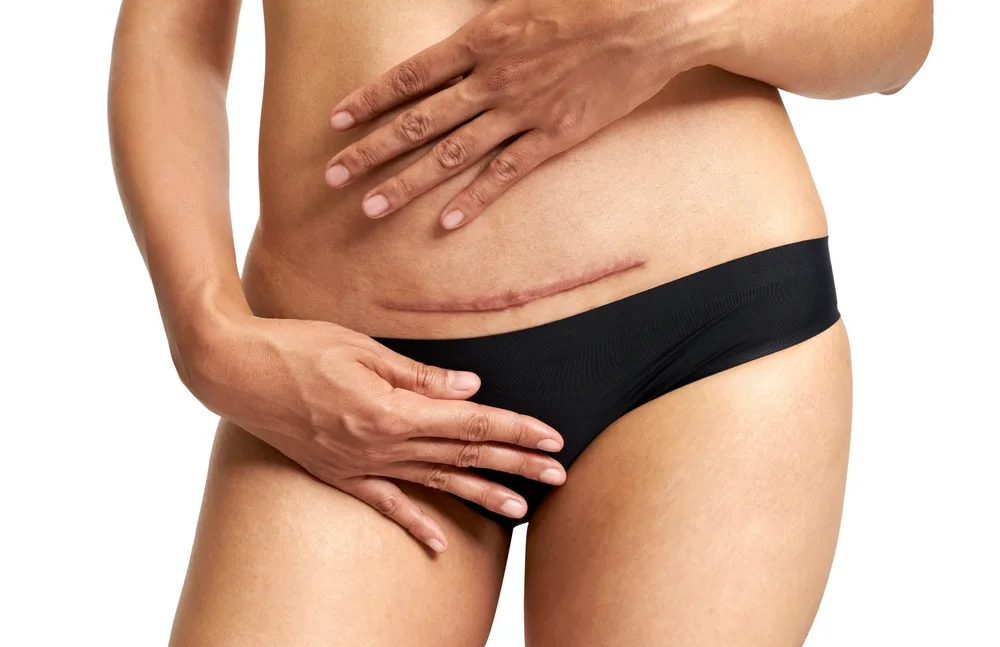
A scar can remain noticeable long after the event that caused it has passed. It may be wider than expected, raised above the skin, tethered to deeper tissue, or positioned where it catches the light. Some scars are mainly a concern in photographs or clothing. Others itch, feel tight, or restrict movement near a joint or a facial feature.
Scar revision aims to improve selected characteristics of an existing scar. Depending on the problem, treatment may involve surgery, a nonsurgical approach, or a sequence of treatments. The goal is improvement in appearance, comfort, or function. No treatment can erase a scar completely or return injured skin to exactly the way it was before.
At Women’s LifeCenter Aesthetic Surgery and Medispa, Elysa Fisher, MD, FACS, evaluates scars for patients from Chicago at our Wilmette office. The recommendation depends on how the scar formed, how it has changed, and what aspect bothers you most.
A careful assessment can also help determine whether treatment is appropriate now or whether further natural maturation may improve the scar. That distinction matters because a recent red scar and a mature, widened scar are not necessarily best managed in the same way.
Schedule a Complimentary Consultation
Understanding What Makes a Scar Noticeable
Scars differ from surrounding skin in their collagen arrangement, color, texture, and flexibility. A flat scar may draw attention because it is pale against darker skin, while a scar of similar color may stand out because it is raised or catches a shadow. Width, direction, and location also affect visibility. The same scar can look different under overhead lighting, in a photograph, or during movement.
Identifying the specific issue helps define a useful treatment goal. You may care most about thickness, a depressed area, or a line that crosses a natural crease. Someone else may prioritize relief from pulling. A revision designed to improve one feature may not fully address another, so the consultation should move beyond the general wish to make the scar disappear.
Different Scar Patterns Need Different Plans
Raised Scars
Hypertrophic scars are raised within the boundaries of the original injury, while keloids extend beyond those boundaries. Both can be uncomfortable or visually prominent, but they have different behavior and recurrence concerns. A history of thick scarring, including after piercings or minor injuries, is important. Removing a raised scar without considering how it formed may lead to another troublesome scar.
Wide or Depressed Scars
A widened scar may reflect tension, wound separation, or the way an area healed. A depressed scar may be attached to deeper tissue or associated with a loss of underlying support. Improving width can require a different strategy from releasing tethering or addressing a contour deficit. The surface appearance alone does not always reveal what is happening beneath it.
Scars That Pull or Limit Movement
Contracted scars can tighten across a joint or distort nearby structures. A scar near an eyelid, lip, or other mobile feature may affect function as well as appearance. These concerns deserve a specific examination, and earlier treatment may be considered when function is compromised. Cosmetic timing advice for a flat, comfortable scar may not apply to a restrictive one.
Why Scar Age Matters
Scars continue to remodel for many months. Early redness, firmness, and sensitivity may gradually improve as healing progresses, sometimes over a year or longer. Operating too early on a scar that is still changing can make it harder to judge what correction is necessary. Time alone, however, does not reliably correct every widened, distorted, or restrictive scar.
The appropriate timing depends on the scar’s behavior and the reason for treatment. A stable appearance is useful when planning elective revision, while pain, functional restriction, or another concerning change may call for earlier assessment. If a previously stable area begins bleeding, ulcerating, growing, or changing unexpectedly, it should be medically evaluated rather than assumed to be an ordinary cosmetic scar problem.
What Surgical Scar Revision May Involve
Surgical revision can remove selected scar tissue and close the area again under more favorable conditions. Planning may focus on distributing tension, aligning the incision with a natural crease, or changing a scar’s direction. In selected situations, local tissue rearrangement can lengthen a contracted area or break up a conspicuous straight line.
The new scar may be longer than the original, particularly when extra length is needed to achieve a smoother closure or redirect tension. That does not necessarily mean the result will be more noticeable. Length is only one part of visibility; width, orientation, contour, and tissue movement also matter. Ask Dr. Fisher to explain the proposed scar pattern before agreeing to a revision.
When Nonsurgical Care May Be Appropriate
Some scars may benefit from measures directed at thickness, inflammation, or surface characteristics rather than immediate excision. Silicone-based scar care, selected injections, or skin-directed treatments may be discussed depending on the diagnosis and the practice’s recommendation. These options are not interchangeable, and a product marketed for scars cannot be assumed to suit every stage of healing.
An incision must be appropriately healed before many topical scar products are considered. Treatment of a raised scar may also require repeated visits and observation of its response. Tell Dr. Fisher what you have already used, how consistently you used it, and whether it caused irritation. That history helps distinguish a treatment that has not been tried adequately from one that was unsuitable for the scar.
Special Considerations for Keloids
Keloids can recur after treatment and may become more extensive after another injury. Their behavior makes a simple promise of removal misleading. Management may involve a combination approach and a longer period of follow-up, with the plan tailored to the location, size, prior treatment, and your history of recurrence.
If you have developed keloids elsewhere, mention every affected area, even if the current scar seems different. Family history may also be relevant. Before surgery, ask how recurrence risk will be managed and what follow-up treatment might be recommended. The decision should account for the possibility that further treatment will be needed rather than treating one excision as a guaranteed permanent solution.
Your Scar Assessment With Dr. Fisher
Bring information about the injury or operation that caused the scar, how long it has been present, and any problems during the original healing. Infection, delayed closure, trauma, or a retained material can influence the current appearance. Photographs taken over time can be helpful when the scar has changed or when you are unsure whether improvement has stopped.
The examination evaluates width, thickness, color, mobility, location, and the condition of surrounding skin. Describe symptoms such as itching, tenderness, numbness, or pulling with movement. Your medical history, medications, nicotine exposure, and previous scars also help estimate how another incision might heal. The goal is to understand both the existing scar and the conditions that could influence a replacement scar.
Setting a Specific Improvement Goal
It may help to rank your concerns. Would a flatter scar still feel worthwhile if some discoloration remained? Is easier movement more important than making the line shorter? Would you accept a longer but better-positioned scar? These questions create a practical definition of success that is more useful than expecting the treated area to become indistinguishable from uninjured skin.
Photographs can document the starting point, but the scar’s feel and behavior may matter just as much as its appearance. A revision can sometimes improve a pulling sensation or contour while leaving visible evidence of healing. Dr. Fisher will explain which changes seem achievable and which features are less likely to respond to the proposed treatment.
Preparing for Revision
Preparation varies with the size and complexity of the procedure. A small revision under local anesthesia has different requirements from a larger operation involving tissue rearrangement. Confirm the planned setting, anesthesia, transportation needs, and time away from work. Do not assume that every scar procedure requires minimal downtime simply because the original scar is narrow.
Review prescriptions, supplements, and any conditions affecting healing with the team. If the scar lies on an area that moves or stretches frequently, plan how you will protect it. A shoulder incision, abdominal scar, and facial revision each face different mechanical demands. Chicago patients should include follow-up appointments in Wilmette when organizing the treatment schedule.
Caring for the New Incision
After surgical revision, the area begins another healing process. Mild swelling, bruising, tenderness, or redness may occur, and the new line can initially look more noticeable than the mature scar that was removed. Dressings, closure materials, and wound care instructions depend on the procedure. Follow those instructions closely rather than returning immediately to the products used on the old scar.
Protect the closure from unnecessary tension and friction while remaining active within the limits provided. Report separation, worsening pain, spreading redness, unexpected drainage, or fever. If the scar is near a mobile feature, follow any specific movement guidance. Early attention to a wound issue can be more useful than waiting to see whether it becomes part of the final scar.
Judging Results Over Months
The first stage of closure is not the final result of revision. Scar color, firmness, and flexibility continue changing after stitches are removed or the surface appears healed. Improvements should be assessed over an appropriate interval, with photographs taken under similar conditions if they are being used for comparison. Daily inspection under changing lighting can make normal variation seem like deterioration.
Sun protection and recommended scar care may help support the healing process, but no product guarantees a fine, pale line. Some scars remain visible, widen again, or require additional treatment. If another step is considered, its timing depends on the tissue response and the problem that remains. Revision is best understood as an attempt to improve healing conditions and scar characteristics, not to control every aspect of biology.
Risks and Limitations of Treatment
Surgical risks include bleeding, infection, wound separation, altered sensation, pain, skin loss, and an unsatisfactory cosmetic result. A new scar can become widened, raised, or more noticeable than expected, and the original problem may recur. Treatment near important structures can involve additional risks that depend on location. Anesthesia considerations vary with the procedure.
Nonsurgical treatments also have potential adverse effects, including irritation, pigment changes, skin thinning, or other effects specific to the method used. Your consent discussion should match the recommended treatment rather than focus only on surgery. Understanding those tradeoffs helps you decide whether the degree of expected improvement is enough to justify intervention.