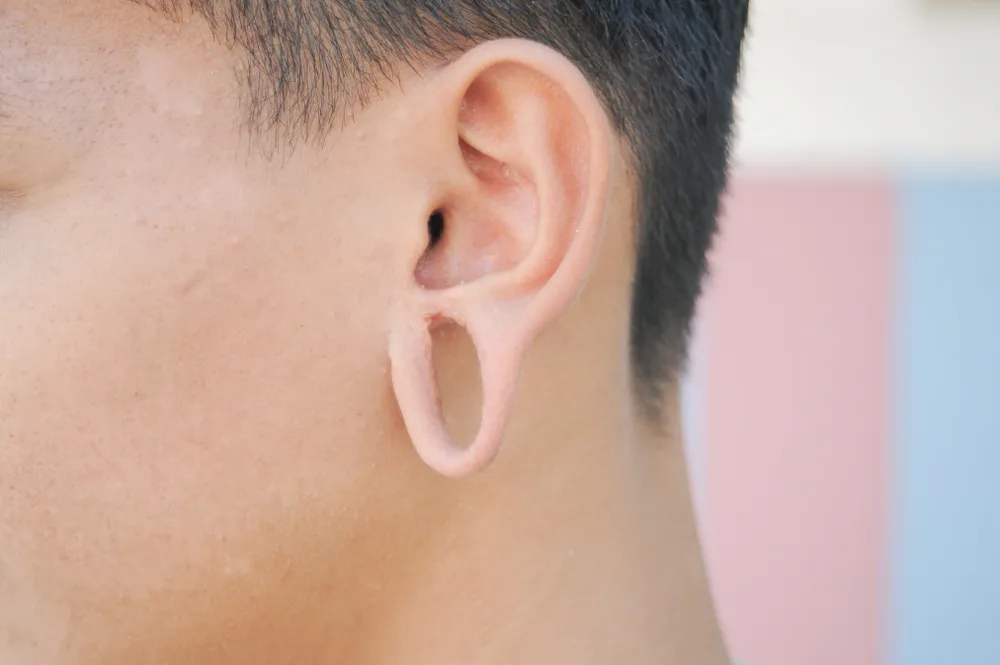
An earring that no longer sits upright can be the first sign that a piercing has stretched. You might find yourself choosing smaller jewelry, using a backing to hide the opening, or leaving one earring out altogether. For someone with a completely split lobe or an opening left by a gauge, the concern may remain visible even without jewelry. Although the affected area is small, it can change how comfortable you feel wearing your hair up or getting dressed for an occasion.
Earlobe repair addresses damage to the soft lower portion of the ear. The operation may close an elongated piercing, reconnect separated tissue, or reshape a lobe that has become distorted. The aim is to create a more continuous, balanced contour while preserving as much useful tissue as the repair allows.
Women’s LifeCenter Aesthetic Surgery and Medispa welcomes Chicago clients to our Wilmette office for assessment with Elysa Fisher, MD, FACS. A consultation considers the particular tear or opening, the quality of the surrounding tissue, and whether you hope to wear earrings again. Your plan should account for the appearance of the bare lobe as well as its future use.
You do not need to decide whether your concern is significant enough for surgery before making an appointment. Bring attention to what has changed, what you have tried, and what you would like restored. Dr. Fisher can explain whether repair is appropriate, where a scar would lie, and what the recovery would require. Women’s LifeCenter earlobe repair
Schedule a Complimentary Consultation
Meet Your Earlobe Repair Surgeon Near Chicago
Small operations still benefit from careful surgical judgment. A few millimeters can affect the curve along the bottom of an earlobe, the position of a future piercing, or the way the repaired side compares with the other ear. The decision is about how the tissue can be reconstructed, not simply whether a gap can be stitched closed.
Dr. Elysa Fisher is a Northwestern-trained plastic surgeon who has been board-certified in plastic surgery since 1992. Her experience includes aesthetic surgery and focused office procedures. That background supports a discussion of tissue shape, scar placement, healing, and the limits of correction.
During your visit, you should have an opportunity to explain any previous problems with scars or piercings. A lobe that has been repaired before, for example, may have different tissue available from one with a first-time tear. A history of raised scars can also influence the conversation about treatment and follow-up.
The surgeon you choose should be willing to discuss details that matter to you, including whether the repaired lobe could look smaller and how soon earrings might be considered. An appropriate recommendation gives you a realistic picture of the tradeoff between closing the defect and accepting a surgical scar. About Dr. Fisher
Earlobe Repair Designed Around the Damage Present
The same phrase, torn earlobe, can describe very different situations. One person has a narrow slit with a small bridge of skin underneath. Another has two separate ends after an earring pulled through. A third has a wide opening surrounded by thin, stretched tissue after years of wearing gauges.
These differences affect how a repair is designed. The amount of tissue remaining, its thickness, and its ability to meet without excessive tension all matter. Simply pulling two edges together may not produce a smooth shape if the surrounding tissue is unusually elongated or uneven.
Your natural ear shape also provides context. Some lobes attach closely to the side of the face; others hang more freely. The two ears may have differed before the injury. A photograph from before the damage can sometimes help you explain the appearance you remember, although surgery cannot guarantee an exact return to that earlier shape.
The practical goal should be agreed upon before proceeding. You may want a closed lobe that looks comfortable without jewelry, a stronger-looking lower border, or the possibility of a new piercing later. Those goals can overlap, but each deserves its own discussion.
Types of Earlobe Concerns That May Be Repaired
A Piercing That Has Become Long or Narrow
Years of downward pull can turn a small round piercing into an elongated opening. The change may be gradual enough that you notice it only when a stud tilts forward or a decorative backing no longer conceals the channel. Continuing to load the area can place more stress on the remaining tissue.
If the bottom edge is still intact, the operation may focus on removing the stretched tract and closing the opening. Whether additional reshaping is needed depends on the lobe itself. A mildly elongated hole and a severely thinned lower border do not necessarily call for the same repair.
Avoid trying to judge the strength of the remaining bridge by tugging on it. Let the surgeon examine the area and discuss jewelry use while you wait for treatment. A cosmetic concern can become more complicated if the remaining tissue tears.
A Completely Split Earlobe
A full split divides the lower border of the lobe. It can follow a sudden snag or develop after a piercing gradually stretches through the remaining tissue. Once the edges have healed separately, they generally do not reconnect simply because earrings are no longer worn.
Repair usually requires preparing the healed surfaces and carefully bringing the tissue back together. The alignment of the lower edge is particularly important because a small notch can remain noticeable after the wound closes.
If an injury has just occurred, seek prompt medical assessment rather than treating it as an ordinary elective consultation. Ongoing bleeding, contamination, missing tissue, or damage involving the upper ear can change the urgency and type of care needed.
Openings Left by Gauges
Removing a gauge may allow some contraction, but a larger opening can remain. The surrounding ring of tissue may be too thin or long to resemble the original lobe without reconstruction. The size of the previous jewelry alone does not fully describe the repair required.
The examination considers the remaining tissue around the entire opening. A plan may involve excision and rearrangement rather than a straight closure. The surgeon must balance the desire to close the hole with the need to preserve a reasonable lobe contour.
Explain whether both ears were stretched to the same extent and whether either side has torn previously. These details can help establish why the two repairs may differ even when they are completed at the same visit.
Irregular Borders and Earlier Repairs
A healed injury can leave a notch, a step in the lower edge, or a lobe that hangs differently. Previous repair may have closed the opening while leaving a shape you would like reassessed. In some cases, revision can improve the contour; in others, limited tissue or existing scarring restricts the available change.
Revision is not automatically the same operation repeated. The surgeon needs to understand where the scar lies and how much healthy tissue remains. Bring records from prior treatment when available, especially if there were wound problems or more than one procedure.
An assessment can also distinguish a contour issue from a thick or growing scar that needs a different treatment strategy. ASPS overview of earlobe repair
How Earlobe Repair Differs From Other Ear Procedures
Earlobe repair works on the soft lower part of the external ear. It does not usually change the cartilage framework or move a projecting ear closer to the head. Those concerns belong to a different discussion about otoplasty.
A lobe that is naturally large or has lengthened with age may need reshaping or reduction rather than closure of a damaged piercing alone. Although these concerns can be addressed during the same consultation, the incision and intended result may differ.
Likewise, a firm lump near a piercing should not automatically be assumed to be ordinary scar tissue. Examination may be needed to identify the problem before choosing surgery. New growth, persistent drainage, redness, or tenderness deserves attention beyond its effect on appearance.
Tell Dr. Fisher whether your concern is the opening, overall lobe size, a raised area, or the position of the entire ear. Distinguishing these features helps keep the proposed procedure aligned with what you actually want changed. ASPS ear surgery information
Who May Be a Candidate for Earlobe Repair?
A consultation may be appropriate when an old tear, stretched piercing, or gauge opening affects your appearance or jewelry use. The condition does not need to be painful to justify discussing repair. At the same time, deciding that the scar and recovery are not worthwhile is a reasonable choice.
Your general health and healing history influence the recommendation. Tell the practice about diabetes, bleeding conditions, medications that affect clotting, nicotine use, and problems with earlier wounds. These factors can matter even when the operation is performed under local anesthesia.
Active infection or inflammation may need treatment before elective reconstruction. A tender, draining piercing should be evaluated rather than simply closed over. If a large scar has developed after piercing, the surgeon may discuss the possibility of recurrence and whether additional measures are needed.
Candidates should also understand that a repaired lobe is not made invulnerable to future injury. A return to heavy earrings or repeated pulling can damage the tissue again. Willingness to protect the repair and reconsider jewelry habits is part of deciding whether surgery fits your goals.
For younger clients, maturity, ability to cooperate, and family involvement require individual consideration. The timing should support safe treatment and reliable aftercare rather than a deadline imposed by a particular event.
Your Earlobe Repair Consultation
The consultation starts with the history of the problem. Explain whether the change developed slowly, followed a recent accident, or occurred after stretching the piercing. Mention how long jewelry has been out, whether the area has been infected, and whether someone has attempted repair before.
Dr. Fisher examines the opening, the lower border, and the tissue on both sides. She may compare the ears to identify which differences come from damage and which are part of your natural anatomy. Photographs can document the starting point and support planning.
This visit is also an opportunity to discuss the appearance you want when no earrings are being worn. Sometimes a client focuses on recreating a piercing but has not considered the size or curve of the repaired lobe. Those details are easier to discuss before an incision is made.
Ask where the scar is likely to sit, whether the original hole will close, and how the surgeon would approach repiercing later. If you want both ears treated, ask whether their different starting points affect the plan or recovery.
Before scheduling, understand the procedure fee, follow-up arrangements, anesthesia plan, and expected restrictions. You should leave knowing what the operation is intended to improve and which aspects of your ear will remain unchanged. The more specific that understanding is, the more useful it becomes when judging the final result.
Preparing for Earlobe Repair Surgery
Preparation for a focused office procedure is generally simpler than preparation for extensive surgery, but it still requires following your individual instructions. Provide an accurate medication list and let the office know about new health concerns before the appointment.
Do not stop anticoagulants or another prescribed medicine without guidance from the clinician managing it. If a medication adjustment is appropriate, the surgical team and prescribing clinician should agree on the plan. Avoid assuming that a small incision makes medication history unimportant.
Discuss smoking, vaping, and other nicotine use honestly. Ask what changes are needed to support healing and how long they should be maintained. Also report allergies to local anesthetics, adhesives, topical products, or materials used in previous dressings.
Arrange your schedule around the first few days of protecting the repair. Consider whether work requires a headset, helmet, frequent telephone use, or equipment that presses on the ear. The office can advise you about adapting those activities.
If the operation is intended to prepare for an occasion, plan the consultation well in advance. Closing the wound, allowing the scar to settle, and receiving approval for a new piercing are separate stages. A wedding or anniversary date does not shorten the time tissue needs to heal.
What Happens During the Repair?
Many earlobe repairs can be performed in an office setting with local anesthesia. The numbing injection may sting briefly; after the area is anesthetized, you should tell the team if you feel pain rather than assuming you must tolerate it. The exact setting depends on the complexity of your case.
The surgeon prepares the tissue so the surfaces can heal together. With an established piercing or healed split, this commonly means removing the skin lining the defect. The remaining edges are then shaped and secured, with attention to maintaining a smooth contour.
Larger defects can require more involved rearrangement. The repair may not follow the line you imagine from looking at the opening alone. This is why the planned technique and expected scar should be explained during consultation rather than chosen solely from a photograph.
After closure, you receive wound-care instructions and a plan for review. Ask whether the sutures need removal and how to manage the dressing at home. Procedure length varies with the number of ears and the reconstruction required, so confirm the expected appointment duration before arranging transportation or work commitments. ASPS guidance on torn and stretched earlobes
Recovery and Follow-Up Care
Protecting the Fresh Repair
The first stage of recovery centers on protecting a small wound from unnecessary stress. Mild tenderness, swelling, or bruising can occur. Follow the practice’s instructions for cleaning and any recommended ointment or dressing, rather than applying a collection of products intended for routine piercing care.
Think about things that can catch on the ear: clothing pulled over the head, a hairbrush, mask loops, and a child’s hand. Let family members know which side needs protection. Choose practical adjustments that reduce pulling while the incision is vulnerable.
Returning to Daily Activities
Many clients can manage ordinary light activities relatively soon, but their specific duties matter. Desk work may be easier to resume than a job requiring tight protective headgear. Exercise, swimming, contact sports, and activities involving friction should be discussed separately.
Comfort is not the only guide to readiness. A wound may stop hurting before it has developed enough strength for pressure or jewelry. Follow the activity schedule provided for your repair and ask before returning to something that places direct stress on the lobe.
Attending Follow-Up Visits
Review appointments allow assessment of the wound edges, swelling, and developing shape. They also provide an opportunity to remove sutures when appropriate and discuss any change in aftercare.
Contact the office sooner for increasing redness, drainage, wound separation, worsening pain, fever, or another unexpected development. A small surgical site still deserves prompt evaluation if it is not healing as expected. Keep the contact instructions accessible instead of waiting until a concern arises to locate them.
Scars and the Final Earlobe Shape
Repair trades an opening or deformity for a surgical scar. The scar may be noticeable at first and can change in color, firmness, and prominence over the following months. Its final appearance depends on the incision, tension, wound healing, and your individual tendency to scar.
Do not judge the final contour from early swelling alone. At the same time, bring persistent notching, thickening, or an unusual change to the surgeon’s attention. Follow-up can help distinguish normal maturation from a problem that warrants treatment.
Ask before starting silicone, massage, or another scar-care measure. Timing matters because products and pressure appropriate for a closed, healed incision may not be suitable for a fresh wound. Sun protection should also be discussed once the area can tolerate the recommended product.
A natural-looking result does not mean the ear becomes identical to the opposite side or that the scar disappears completely. A more useful goal is an improvement in continuity, proportion, and comfort with the lobe’s appearance. Compare the outcome with the original concern rather than with a magnified image of perfectly unmarked skin.
Wearing Earrings After Earlobe Repair
Repiercing should wait until the surgeon confirms that the tissue has healed sufficiently. The appropriate interval depends on the repair and how recovery proceeds. Receiving permission for normal daily activity does not automatically mean the lobe is ready to support jewelry.
The new piercing usually needs to be positioned away from the scar and with enough tissue beneath it. Reopening the old track without guidance can undermine the purpose of reconstruction. Discuss who should perform the piercing and how the location will be chosen.
When jewelry is permitted, weight and design deserve consideration. A lighter earring may place less strain on the tissue than a heavy, swinging piece. Do not assume that a repaired lobe can safely support jewelry that contributed to the original damage.
Some clients choose not to pierce again. Repair can still be worthwhile if the goal is a smooth, closed contour without earrings. Let the surgeon know your preference because future jewelry use is one part of planning, not a requirement for surgery.
Risks and Limitations of Earlobe Repair
Potential complications include bleeding, infection, wound separation, delayed healing, altered sensation, and an unsatisfactory scar or contour. A notch, asymmetry, or recurrent stretching may remain or develop. Some clients may need additional treatment, and a second procedure cannot always achieve every desired change.
People who form keloids or other prominent scars need a specific discussion of that history. Removing a scar does not guarantee that a similar or larger one will not return. If a piercing has produced a growing scar before, mention it even if it occurred elsewhere on the body.
The amount of available tissue also places limits on reconstruction. A very large gauge or repeated repairs may leave less flexibility than a narrow, uncomplicated split. The surgeon should explain the likely shape rather than promise restoration of tissue that is no longer present.
Risk discussions should remain specific to your case. Ask which issues are most relevant to your anatomy and health and what measures are used to reduce them. Understanding those tradeoffs allows you to decide whether the expected improvement is enough to justify surgery.
Why Choose Women’s LifeCenter for Earlobe Repair Near Chicago?
A focused concern deserves a focused consultation. You should not have to minimize the importance of a damaged earlobe simply because the operation is smaller than other plastic surgery procedures. Equally, treatment should remain proportionate to the problem you want addressed.
At Women’s LifeCenter, the conversation can include appearance, comfort, jewelry habits, and any anxiety about another injury. Dr. Fisher’s broader surgical experience supports an explanation of both straightforward repair and situations that require more thoughtful reconstruction.
Choosing a practice also means considering what happens after the procedure. You should know when the repair will be reviewed, how questions will be answered, and who will advise you about repiercing. These details help turn a one-day operation into a coherent course of care.
For Chicago clients, our Wilmette location provides an option for assessment and follow-up outside the city. The right choice is the practice where you understand the plan, feel able to ask questions, and have realistic expectations about the result.
Earlobe Repair for Chicago and Nearby Communities
Women’s LifeCenter Aesthetic Surgery and Medispa is located at 124 1/2 Skokie Blvd, Wilmette, IL 60091. Chicago clients travel to Wilmette for consultations, appropriate office procedures, and postoperative visits. The practice does not need to be in your own neighborhood to provide continuity, but travel should be considered before scheduling.
Ask how many visits are likely and whether any particular appointment must fall within a specific healing interval. If you use public transportation or depend on someone else for a ride, plan around the actual anesthesia and aftercare instructions you receive.
Include your work routine in that planning. A short procedure can still require changes to a headset, uniform, or exercise schedule. Knowing those details ahead of time allows you to arrange repair with fewer practical surprises.